
Hashimoto’s Disease: Symptoms, Diagnosis & Treatment
Article Sidebar
Main Article Content
Hashimoto’s disease is an autoimmune condition in which the immune system attacks the thyroid gland. Over time, this can reduce thyroid hormone production and cause hypothyroidism. Common symptoms include tiredness, feeling cold, weight gain, dry skin, constipation, muscle aches, and changes in mood or concentration. Some people have no symptoms at first. Diagnosis usually involves thyroid-stimulating hormone (TSH), free thyroxine (T4), and thyroid antibody blood tests. People who develop hypothyroidism are usually treated with levothyroxine, a replacement thyroid hormone. With appropriate testing, treatment, and follow-up, most people with Hashimoto’s disease can maintain normal thyroid hormone levels and live well.
Cite as: Hashimoto’s Disease: Symptoms, Causes, Diagnosis, Treatment, and Outlook. Brisbane (AU): Exon Publications; 2024 Jun 24 [updated 2026 Aug 25].
Introduction
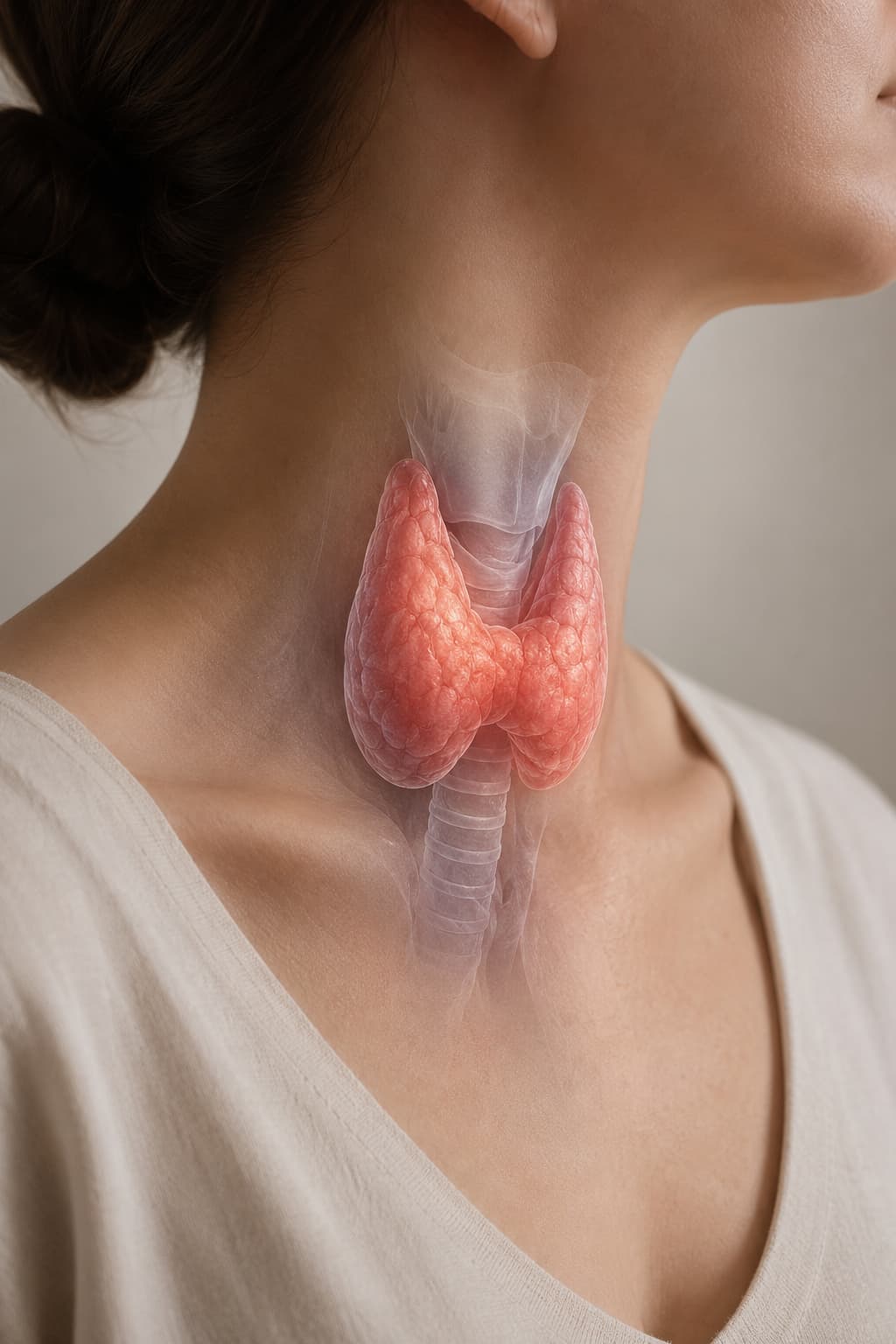
Hashimoto’s disease, also called Hashimoto thyroiditis or chronic autoimmune thyroiditis, is a condition in which the immune system attacks the thyroid gland. The thyroid is a small gland in the front of the neck that produces hormones controlling how the body uses energy. Hashimoto’s disease can slowly damage the gland and is a major cause of an underactive thyroid, or hypothyroidism. However, not everyone with Hashimoto’s disease has low thyroid hormone levels when the condition is first discovered (1).
What Is Hashimoto’s Disease?
Hashimoto’s disease is an autoimmune disease. Normally, the immune system protects the body from infections. In Hashimoto’s disease, immune cells and antibodies mistakenly target proteins in the thyroid gland. This causes ongoing inflammation and can gradually damage thyroid cells (1).
The most common antibodies are thyroid peroxidase antibodies (TPOAb) and thyroglobulin antibodies (TgAb). Thyroid peroxidase and thyroglobulin are normal parts of the thyroid’s hormone-making system.
Hashimoto’s disease and hypothyroidism are related but are not the same thing. Hashimoto’s disease describes the autoimmune attack on the thyroid. Hypothyroidism means that the thyroid cannot make enough hormone. A person can have Hashimoto’s disease while thyroid hormone levels are still normal. If enough thyroid tissue is damaged, hypothyroidism may develop later (1).
Rarely, early inflammation can release stored thyroid hormone into the blood and temporarily cause high thyroid hormone levels. This is sometimes called hashitoxicosis. It usually settles as the inflammation changes over time (1).
What Causes Hashimoto’s Disease?
There is no single cause of Hashimoto’s disease. It develops through a combination of genetic susceptibility, immune-system changes, and environmental influences (1).
The condition often runs in families. Having a parent, sibling, or other close relative with autoimmune thyroid disease increases the risk. People with other autoimmune conditions, such as type 1 diabetes, celiac disease, rheumatoid arthritis, or certain other immune disorders, are also more likely to develop autoimmune thyroid disease.
Hashimoto’s disease is much more common in women than in men and becomes more common with age, although it can occur at any stage of life (1, 2).
Iodine is needed to make thyroid hormones, but very high iodine intake can contribute to thyroid problems in susceptible people. Other environmental and immune factors are being studied, but most people cannot identify one specific event that caused their disease (1).
What Are the Symptoms of Hashimoto’s Disease?
Some people with Hashimoto’s disease have no symptoms, especially while the thyroid is still making enough hormone. Symptoms usually become more noticeable if hypothyroidism develops.
Common symptoms may include tiredness, feeling unusually cold, weight gain, dry or coarse skin, constipation, muscle aches, muscle weakness, slower thinking, difficulty concentrating, low mood, and a slower heart rate. Hair may become dry or thin. Menstrual periods can become heavier or less regular.
Symptoms can develop slowly over months or years. Because tiredness, weight changes, dry skin, and poor concentration can have many other causes, symptoms alone cannot confirm Hashimoto’s disease (1).
Some people develop an enlarged thyroid gland called a goiter. This may cause swelling or a feeling of fullness at the front of the neck. In other people, the thyroid gradually becomes smaller as thyroid tissue is lost.
How Is Hashimoto’s Disease Diagnosed?
Hashimoto’s disease is mainly diagnosed with blood tests. The most important tests assess thyroid function and look for thyroid antibodies (1).
Thyroid-stimulating hormone: Thyroid-stimulating hormone (TSH) is produced by the pituitary gland in the brain. It tells the thyroid how much hormone to make. When the thyroid begins to fail, TSH usually rises because the body is trying to stimulate the thyroid to work harder.
Free thyroxine: Free thyroxine, or free T4, measures one of the main thyroid hormones circulating in the blood. A high TSH together with a low free T4 usually indicates overt hypothyroidism.
Thyroid antibodies: TPOAb is the antibody most commonly used to support a diagnosis of autoimmune thyroid disease. TgAb may also be measured. Antibody levels do not directly show how well the thyroid is working, so thyroid function is assessed mainly with TSH and free T4 (1).
An ultrasound is not required for every person with Hashimoto’s disease. It may be used if the thyroid is enlarged, feels uneven, contains a possible nodule, or if the diagnosis remains uncertain. Ultrasound can show changes in the structure of the gland that are commonly seen in autoimmune thyroiditis.
What Is Subclinical Hypothyroidism?
Subclinical hypothyroidism means that TSH is above the normal laboratory range but free T4 remains normal. Some people with Hashimoto’s disease pass through this stage before developing overt hypothyroidism (1, 3).
Treatment is not automatically required for every person with a mildly increased TSH. The decision depends on how high the TSH is, whether the abnormal result continues on repeat testing, age, symptoms, thyroid antibodies, heart health, pregnancy or pregnancy plans, and other medical factors.
People who are not treated immediately usually have repeat blood tests so that changes in thyroid function can be detected.
How Is Hashimoto’s Disease Treated?
Treatment depends on thyroid function rather than simply on the presence of thyroid antibodies. People with Hashimoto’s disease whose TSH and thyroid hormone levels are normal generally do not need thyroid hormone replacement. Their thyroid function may instead be monitored over time (1).
When Hashimoto’s disease causes hypothyroidism, the standard treatment is levothyroxine. Levothyroxine is a manufactured form of T4, the main hormone normally produced by the thyroid gland (3).
The correct dose differs between people. It depends on factors such as age, body size, the degree of hypothyroidism, pregnancy, heart disease, and other medicines. Blood tests are used to adjust the dose so that TSH remains in an appropriate range.
Levothyroxine is usually taken consistently at the same time each day. Food and some medicines or supplements can reduce its absorption. Calcium, iron, and certain other products may need to be taken separately from levothyroxine. Specific instructions can depend on the preparation being used (3).
Once the correct dose has been established, many people need only periodic blood tests. Hashimoto’s disease commonly causes permanent hypothyroidism, so levothyroxine treatment is often lifelong.
What If Symptoms Continue Despite Normal Thyroid Tests?
Most people with hypothyroidism are treated successfully with levothyroxine. However, some people continue to report tiredness, poor concentration, mood changes, or other symptoms even when TSH has returned to the target range.
These symptoms should not automatically be assumed to come from the thyroid. Anemia, sleep problems, vitamin deficiencies, depression, medication effects, other autoimmune conditions, and many other problems can cause similar symptoms.
Levothyroxine alone remains the standard thyroid hormone treatment. Combination treatment with T4 and triiodothyronine (T3) has been studied because some people remain symptomatic. Clinical trials have not shown a clear overall benefit for routine combination treatment, although specialist-supervised trials may sometimes be considered for carefully selected people after other causes of symptoms have been assessed (3, 4).
Do Diet or Supplements Help Hashimoto’s Disease?
No specific diet has been proven to cure Hashimoto’s disease or reverse established hypothyroidism. A balanced diet that provides adequate nutrients is appropriate for most people (5).
Iodine is necessary for thyroid hormone production, but more iodine is not necessarily better. Excessive iodine intake can worsen thyroid dysfunction in some people with autoimmune thyroid disease. High-dose iodine supplements should therefore not be taken simply because someone has Hashimoto’s disease (1, 5).
Selenium and vitamin D have been studied because they are involved in thyroid and immune function. Some studies have reported changes in thyroid antibody levels, but evidence that routine supplementation prevents hypothyroidism or produces meaningful long-term symptom improvement remains limited. Supplements can also cause harm when taken in excessive amounts (5).
A gluten-free diet is necessary for people with celiac disease, which occurs more often in people with autoimmune thyroid disease. However, there is not enough evidence to recommend a gluten-free diet for every person with Hashimoto’s disease who does not have celiac disease.
Diet and supplements should not replace levothyroxine when thyroid hormone replacement is needed.
Can Hashimoto’s Disease Affect Pregnancy?
Normal thyroid hormone levels are particularly important before and during pregnancy because thyroid hormone supports both maternal health and fetal development.
People with known hypothyroidism who are planning pregnancy should have their thyroid function reviewed. Levothyroxine requirements often increase during pregnancy, especially in people whose thyroid gland can no longer produce enough hormone on its own. The 2026 American Thyroid Association guideline recommends close monitoring and adjustment of treatment when needed (6).
Having positive TPO antibodies while thyroid hormone levels remain normal does not automatically mean levothyroxine treatment is required. Current evidence shows that giving levothyroxine solely because TPO antibodies are present in a person with normal thyroid function does not improve pregnancy outcomes (6).
Pregnancy changes normal thyroid test ranges, so results need to be interpreted using pregnancy-appropriate values. Thyroid function is usually monitored more closely during pregnancy than at other times.
What Are the Possible Complications of Hashimoto’s Disease?
The main complication of Hashimoto’s disease is hypothyroidism. If significant hypothyroidism remains untreated, it can increase cholesterol levels, affect the heart, cause fertility or menstrual problems, and contribute to problems during pregnancy (1, 3).
Severe, long-standing untreated hypothyroidism can rarely lead to myxedema coma, a life-threatening state in which body functions slow dramatically. This is now uncommon where thyroid testing and treatment are readily available.
A large goiter may occasionally cause pressure or swallowing symptoms. Most people with Hashimoto’s disease do not develop serious neck complications.
Because autoimmune diseases can occur together, clinicians may sometimes investigate for another autoimmune condition when symptoms or family history suggest one.
What Is the Outlook for People With Hashimoto’s Disease?
The outlook is generally very good. Hashimoto’s disease is a long-term autoimmune condition, but the hormone deficiency it causes can usually be managed effectively.
Some people remain thyroid-function normal for many years and need only periodic testing. Others gradually develop hypothyroidism and require levothyroxine. Once an appropriate replacement dose has been found, most people can maintain normal thyroid hormone levels and carry out their usual activities (1, 3).
The levothyroxine dose may need to change over time because of aging, pregnancy, major weight changes, new medicines, or changes in health. Periodic blood testing helps ensure that treatment remains appropriate.
Conclusion
Hashimoto’s disease is an autoimmune condition in which the immune system gradually damages the thyroid gland. It is an important cause of hypothyroidism, but Hashimoto’s disease and hypothyroidism are not identical: thyroid hormone levels can remain normal during the early stages. Diagnosis relies mainly on TSH, free T4, and thyroid antibody tests. People who develop hypothyroidism are usually treated with levothyroxine, while those with normal thyroid function may only need monitoring. No special diet or supplement has been proven to cure the disease. With appropriate follow-up and thyroid hormone replacement when needed, the long-term outlook is generally excellent.
References
- Klubo-Gwiezdzinska J, Wartofsky L. Hashimoto thyroiditis: an evidence-based guide to etiology, diagnosis and treatment. Pol Arch Intern Med. 2022;132(3):16222. https://doi.org/10.20452/pamw.16222
- Hu X, Chen Y, Shen Y, Tian R, Sheng Y, Que H. Global prevalence and epidemiological trends of Hashimoto's thyroiditis in adults: a systematic review and meta-analysis. Front Public Health. 2022;10:1020709. https://doi.org/10.3389/fpubh.2022.1020709
- Jonklaas J, Bianco AC, Bauer AJ, et al. Guidelines for the treatment of hypothyroidism: prepared by the American Thyroid Association Task Force on Thyroid Hormone Replacement. Thyroid. 2014;24(12):1670-1751. https://doi.org/10.1089/thy.2014.0028
- Jonklaas J, Bianco AC, Cappola AR, et al. Evidence-based use of levothyroxine/liothyronine combinations in treating hypothyroidism: a consensus document. Thyroid. 2021;31(2):156-182. https://doi.org/10.1089/thy.2020.0720
- Mikulska AA, Karaźniewicz-Łada M, Filipowicz D, Ruchała M, Główka FK. Metabolic characteristics of Hashimoto's thyroiditis patients and the role of microelements and diet in the disease management—an overview. Int J Mol Sci. 2022;23(12):6580. https://doi.org/10.3390/ijms23126580
- Korevaar TIM, Leung AM, Alexander EK, et al. American Thyroid Association 2026 guidelines for thyroid disease in preconception, pregnancy, and postpartum. Thyroid. 2026;36(5):481-544. https://doi.org/10.1177/10507256261445624
This article is part of the 'Public Education Series' initiative by Exon Publications.
Disclaimer: This article is for general educational purposes only and does not constitute medical advice, diagnosis, or treatment. Consult a qualified healthcare professional about personal health concerns.
Note on External Links: External links were checked and accessible when this article was published. Their content and availability may change over time and are outside the control of Exon Publications.
Explore Other Articles in the Public Education Series
Downloads
Article Details

This work is licensed under a Creative Commons Attribution-NonCommercial-NoDerivatives 4.0 International License.