
Graves' Ophthalmopathy (Thyroid Eye Disease): Symptoms, Diagnosis, Treatment, and Outlook
Article Sidebar
Main Article Content
Graves' ophthalmopathy, also called thyroid eye disease (TED), is an autoimmune condition that affects the muscles and tissues around the eyes. It occurs most often in people with Graves' disease but can sometimes develop when thyroid hormone levels are normal or low. Symptoms include dry or gritty eyes, redness, swelling, bulging eyes, eyelid changes, and double vision. Rarely, severe disease can threaten eyesight. Treatment depends on whether the disease is active and how severe it is. Options include eye drops, smoking cessation, medicines that reduce inflammation or immune activity, and surgery. With appropriate care, most people can achieve good long-term control.
Cite as: Graves' Ophthalmopathy (Thyroid Eye Disease): Symptoms, Diagnosis, Treatment, and Outlook. Brisbane (AU): Exon Publications; 2024 Jun 23 [updated 2026 Aug 25].
Introduction
Graves' ophthalmopathy is an autoimmune disease affecting the tissues around the eyes. It is also called Graves' orbitopathy or thyroid eye disease (TED). The condition is closely linked to Graves' disease, an autoimmune disorder that causes an overactive thyroid. However, TED is a separate condition and can occasionally occur in people whose thyroid hormone levels are normal or low. Most cases are mild, but more severe disease can affect eye movement, appearance, comfort, and, rarely, vision (1, 2).
What Is Graves' Ophthalmopathy?
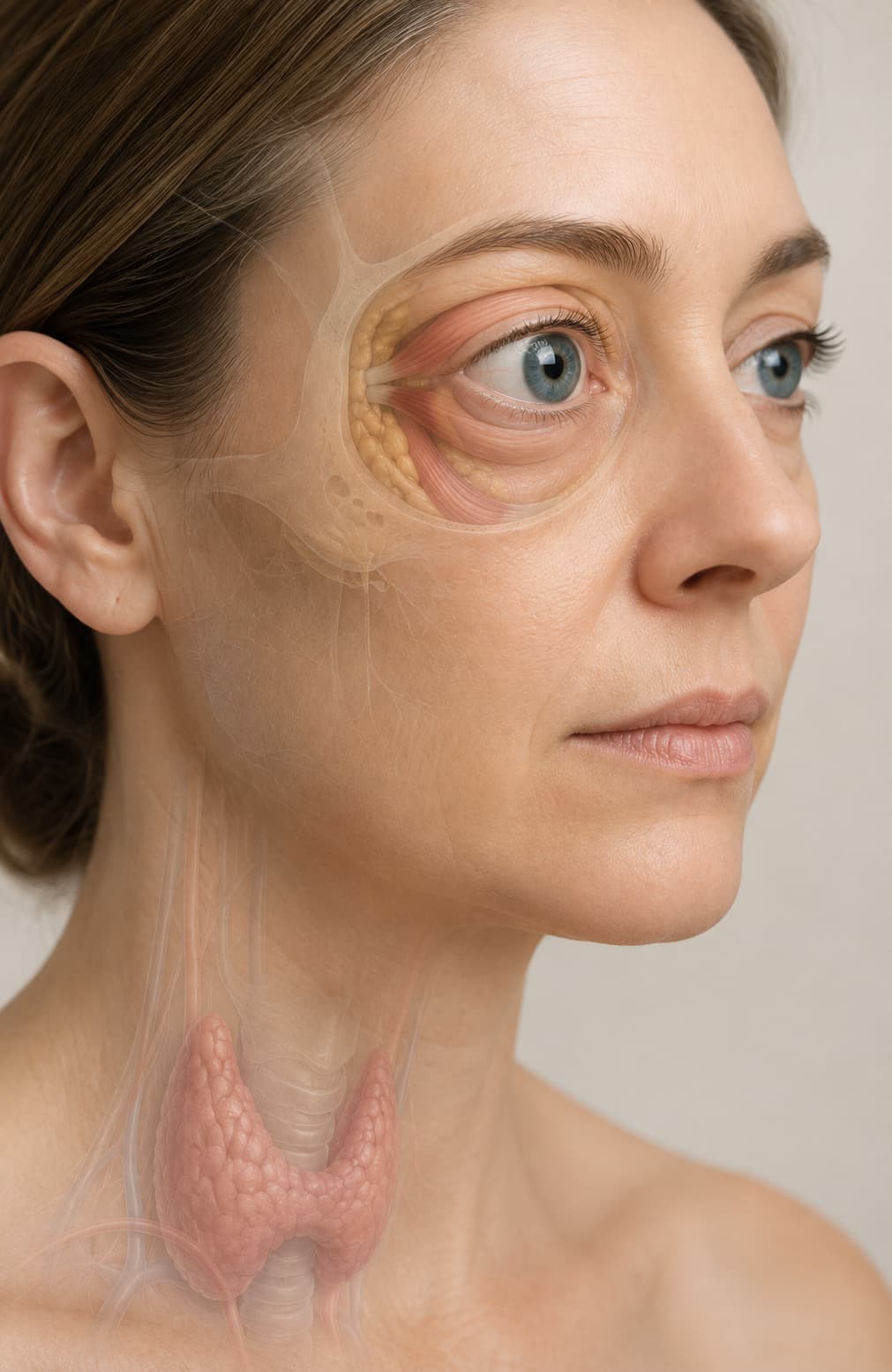
Graves' ophthalmopathy develops when abnormal immune activity causes inflammation in the eye sockets, or orbits. The immune system targets cells in the muscles and fatty tissues behind and around the eyes. These tissues can swell and increase in size (1).
Because the eye socket is surrounded by bone, swollen tissues have limited room to expand. The eyeball may therefore be pushed forward, causing the characteristic bulging appearance called proptosis. Swollen eye muscles can also become stiff and stop the eyes from moving together normally, which may cause double vision.
TED is most strongly associated with Graves' disease, but thyroid hormone levels themselves do not directly cause the eye disease. This explains why eye problems can sometimes begin before Graves' hyperthyroidism is diagnosed, develop after thyroid hormone levels have been treated, or occur in people without current hyperthyroidism (1, 3).
What Causes Thyroid Eye Disease?
Thyroid eye disease is caused by an abnormal immune response. Several immune pathways are involved, including activity involving the thyroid-stimulating hormone receptor and the insulin-like growth factor 1 receptor on cells within the tissues around the eyes (1, 3).
Why this immune response develops in one person and not another is not completely understood. Genetics and environmental factors both contribute.
Smoking is the most important preventable risk factor. People who smoke have a higher risk of developing TED, and the disease tends to be more severe and less responsive to treatment. Exposure to cigarette smoke should therefore be avoided (2, 3).
Poorly controlled thyroid hormone levels may also worsen the condition. High levels of antibodies associated with Graves' disease are linked with greater risk. Radioactive iodine treatment for Graves' hyperthyroidism can sometimes cause new eye disease or worsen existing TED, particularly in people with other risk factors. Preventive steroid treatment may reduce this risk in selected people (2, 3).
What Are the Symptoms of Graves' Ophthalmopathy?
Symptoms vary from mild irritation to major changes in eye movement and vision. Both eyes are usually affected, but one eye may be more affected than the other.
Early symptoms can include dryness, a gritty or sandy feeling, increased tearing, redness, sensitivity to light, and discomfort or pressure around the eyes. The eyelids and tissues around the eyes may become swollen.
The upper eyelid may be pulled higher than normal, exposing more of the eye. This is called eyelid retraction. The eyes may also appear to bulge forward because tissues behind them have become enlarged.
Swelling and stiffness of the eye muscles can cause difficulty moving the eyes together. This may result in double vision, particularly when looking upward or sideways.
Some people experience aching or pain when moving their eyes. Changes in appearance, discomfort, double vision, and difficulty performing everyday activities can have a substantial effect on quality of life (1, 3).
What Do Active and Inactive Thyroid Eye Disease Mean?
Thyroid eye disease often has an active inflammatory stage followed by a more stable or inactive stage. Knowing which stage a person is in is important because treatment differs between them (1, 2).
During the active stage, inflammation is ongoing. Redness, swelling, pain, eye prominence, or double vision may appear or worsen. Medicines that reduce inflammation or alter immune activity are most useful during this stage.
During the inactive stage, the inflammation has settled and the condition is relatively stable. However, changes caused during the active stage may remain. These can include bulging eyes, eyelid retraction, or double vision. Surgery is often considered during the inactive stage when lasting structural problems need correction.
Activity and severity are different. A person can have active disease that is still mild, or inactive disease that has left significant eye changes.
How Is Graves' Ophthalmopathy Diagnosed?
Diagnosis usually begins with an eye examination and a review of thyroid history and symptoms. Doctors assess the eyelids, eye position, eye movement, swelling, redness, vision, and the surface of the eye (1, 3).
The degree of eye protrusion can be measured. Eye movements are checked to determine whether swollen muscles are causing double vision. Visual acuity and color vision may also be tested, particularly when more severe disease is suspected.
Blood tests usually include thyroid-stimulating hormone (TSH) and thyroid hormone levels. Tests for TSH receptor antibodies may help support the diagnosis, especially if the thyroid condition is uncertain.
Computed tomography (CT) or magnetic resonance imaging (MRI) is not necessary for every person. Imaging may be useful when the diagnosis is uncertain, when symptoms are unusual, when only one eye is affected, when severe disease is suspected, or when surgery is being planned. Imaging can show enlargement of the eye muscles and other changes within the orbit (1, 3).
How Is Mild Thyroid Eye Disease Treated?
Mild TED often improves as the active inflammatory stage settles. Treatment focuses on protecting the eyes, reducing discomfort, controlling risk factors, and monitoring for progression (2, 3).
Lubricating eye drops or gels can reduce dryness and irritation. Sunglasses may help with light sensitivity and protect the eyes from wind. If the eyelids do not close fully during sleep, nighttime eye lubrication may be useful. Raising the head slightly while sleeping can sometimes reduce swelling around the eyes.
Stopping smoking is one of the most important measures for people who smoke. Thyroid hormone levels should also be kept stable.
Selenium has been studied in people with mild active Graves' ophthalmopathy. A European clinical trial found that six months of selenium treatment improved quality of life and reduced progression in people with mild disease (5). Current guidance suggests that selenium may be considered for selected people with mild active TED, particularly in areas where selenium intake is low. Routine supplementation is not automatically appropriate for everyone because excessive selenium can be harmful (2, 3).
How Is Moderate or Severe Active Thyroid Eye Disease Treated?
Moderate-to-severe active TED usually requires specialist treatment because inflammation can cause substantial eye prominence, swelling, pain, or double vision.
Intravenous corticosteroids, most commonly methylprednisolone, have long been an important treatment for active disease. They suppress inflammation and immune activity. European guidance recommends intravenous treatment rather than prolonged high-dose oral steroids for many people because it is generally more effective and better tolerated. Mycophenolate, an immune-suppressing medicine, may be combined with intravenous corticosteroids in some treatment approaches (2).
Teprotumumab is a medicine that blocks the insulin-like growth factor 1 receptor, one of the pathways involved in TED. Clinical trials showed that it can reduce eye protrusion, double vision, inflammation, and other features of active disease (4). It is an important option in some countries, particularly for people with significant proptosis or double vision, but availability and approval vary internationally (3, 6).
Teprotumumab can cause side effects including hearing problems, increased blood glucose, and muscle spasms. It is not used during pregnancy. Treatment therefore requires careful specialist assessment (3, 6).
Other immune treatments may be considered when standard therapy is unsuitable or has not worked. The choice depends on disease activity, the main eye problems, other health conditions, previous treatment, availability, and specialist experience (2, 3).
When Can Thyroid Eye Disease Threaten Vision?
Sight-threatening TED is uncommon but requires urgent treatment. Vision can be damaged if swollen tissues and muscles compress the optic nerve at the back of the eye. This is called dysthyroid optic neuropathy (2, 3).
Warning features can include reduced vision, changes in color vision, or loss of part of the visual field. Severe exposure of the front surface of the eye can also damage the cornea if the eyelids cannot close properly.
Sight-threatening disease is treated urgently, usually with high-dose intravenous corticosteroids. If pressure on the optic nerve does not improve quickly enough, orbital decompression surgery may be needed to create more space within the eye socket (2, 3).
What Role Does Surgery Have?
Surgery has two different roles in thyroid eye disease. It may be performed urgently when severe swelling threatens the optic nerve, or later to correct lasting changes after the active inflammation has settled.
Orbital decompression: This operation creates more room within the eye socket by removing part of the surrounding bone and sometimes orbital fat. It allows the eye to move backward and can relieve pressure on the optic nerve.
Eye muscle surgery: Swollen muscles may remain shortened or stiff after the disease becomes inactive. Surgery can adjust their position to reduce persistent double vision.
Eyelid surgery: Eyelid retraction or other lasting eyelid changes can be corrected to improve eye protection, comfort, and appearance.
When several procedures are needed, they are generally performed in a planned sequence after the disease has become stable (2, 3, 6).
How Does Treatment of Graves' Disease Affect the Eyes?
Treating Graves' hyperthyroidism and treating thyroid eye disease are related but separate parts of care. Bringing thyroid hormone levels into the normal range is important, but doing so does not necessarily make established TED disappear (1, 3).
Antithyroid medicines can control Graves' hyperthyroidism without directly treating the eye inflammation. Thyroid surgery can also control hyperthyroidism but does not directly reverse existing eye changes.
Radioactive iodine can sometimes worsen TED, particularly in people who smoke or already have active eye disease. When radioactive iodine is considered, the person's eye disease and other risk factors should therefore be assessed. Corticosteroid treatment may be given around the time of radioactive iodine in people at increased risk (2, 3).
Can Thyroid Eye Disease Come Back?
TED usually has one main active inflammatory period followed by a stable phase, but the course differs between individuals. Reactivation can occur, although it is less common than the initial episode (1).
Smoking, unstable thyroid function, and other immune factors may influence the course. People who have previously had TED should therefore continue appropriate thyroid follow-up and report significant new eye changes.
A recurrence does not necessarily have the same severity as the original episode, and treatment is based on the activity and severity of the new disease.
What Is the Outlook for People With Graves' Ophthalmopathy?
Most people have mild or moderate disease rather than sight-threatening TED. Inflammation often decreases over time, and many symptoms improve as the disease becomes inactive (1).
Some changes can remain after inflammation settles. These may include eye prominence, eyelid retraction, or double vision. Rehabilitative surgery can often improve persistent structural problems.
Modern treatment has expanded considerably. Along with corticosteroids and surgery, targeted immune therapies now provide additional options for selected people with active disease. Early recognition of significant disease, smoking cessation, stable thyroid hormone levels, and treatment matched to disease activity and severity can improve long-term outcomes (2, 3, 6).
Conclusion
Graves' ophthalmopathy, or thyroid eye disease, is an autoimmune condition affecting the tissues around the eyes. It occurs most often with Graves' disease but is not simply caused by excess thyroid hormone. Symptoms range from dryness and swelling to bulging eyes and double vision. Rarely, pressure on the optic nerve can threaten eyesight. Treatment depends on whether the disease is active and how severe it is. Mild disease may need supportive care, while more severe active disease may require corticosteroids or targeted immune treatment. Surgery can correct urgent or lasting structural problems. With appropriate specialist care, most people can achieve good long-term control.
References
- Wiersinga WM, Eckstein AK, Žarković M. Thyroid eye disease (Graves' orbitopathy): clinical presentation, epidemiology, pathogenesis, and management. Lancet Diabetes Endocrinol. 2025;13(7):600-614. https://doi.org/10.1016/S2213-8587(25)00066-X
- Bartalena L, Kahaly GJ, Baldeschi L, et al. The 2021 European Group on Graves' orbitopathy (EUGOGO) clinical practice guidelines for the medical management of Graves' orbitopathy. Eur J Endocrinol. 2021;185(4):G43-G67. https://doi.org/10.1530/EJE-21-0479
- Burch HB, Perros P, Bednarczuk T, et al. Management of thyroid eye disease: a Consensus Statement by the American Thyroid Association and the European Thyroid Association. Thyroid. 2022;32(12):1439-1470. https://doi.org/10.1089/thy.2022.0251
- Douglas RS, Kahaly GJ, Patel A, et al. Teprotumumab for the treatment of active thyroid eye disease. N Engl J Med. 2020;382(4):341-352. https://doi.org/10.1056/NEJMoa1910434
- Marcocci C, Kahaly GJ, Krassas GE, et al. Selenium and the course of mild Graves' orbitopathy. N Engl J Med. 2011;364(20):1920-1931. https://doi.org/10.1056/NEJMoa1012985
- Fox T, Kossler AL, Dosiou C. Thyroid eye disease: management, advances, and future opportunities. Endocr Pract. 2025;31(10):1319-1328. https://doi.org/10.1016/j.eprac.2025.06.011
This article is part of the 'Public Education Series' initiative by Exon Publications.
Disclaimer: This article is for general educational purposes only and does not constitute medical advice, diagnosis, or treatment. Consult a qualified healthcare professional about personal health concerns.
Note on External Links: External links were checked and accessible when this article was published. Their content and availability may change over time and are outside the control of Exon Publications.
Explore Other Articles in the Public Education Series
Downloads
Article Details

This work is licensed under a Creative Commons Attribution-NonCommercial-NoDerivatives 4.0 International License.