
Graves' Disease: Symptoms, Causes, Diagnosis, Treatment, and Outlook
Article Sidebar
Main Article Content
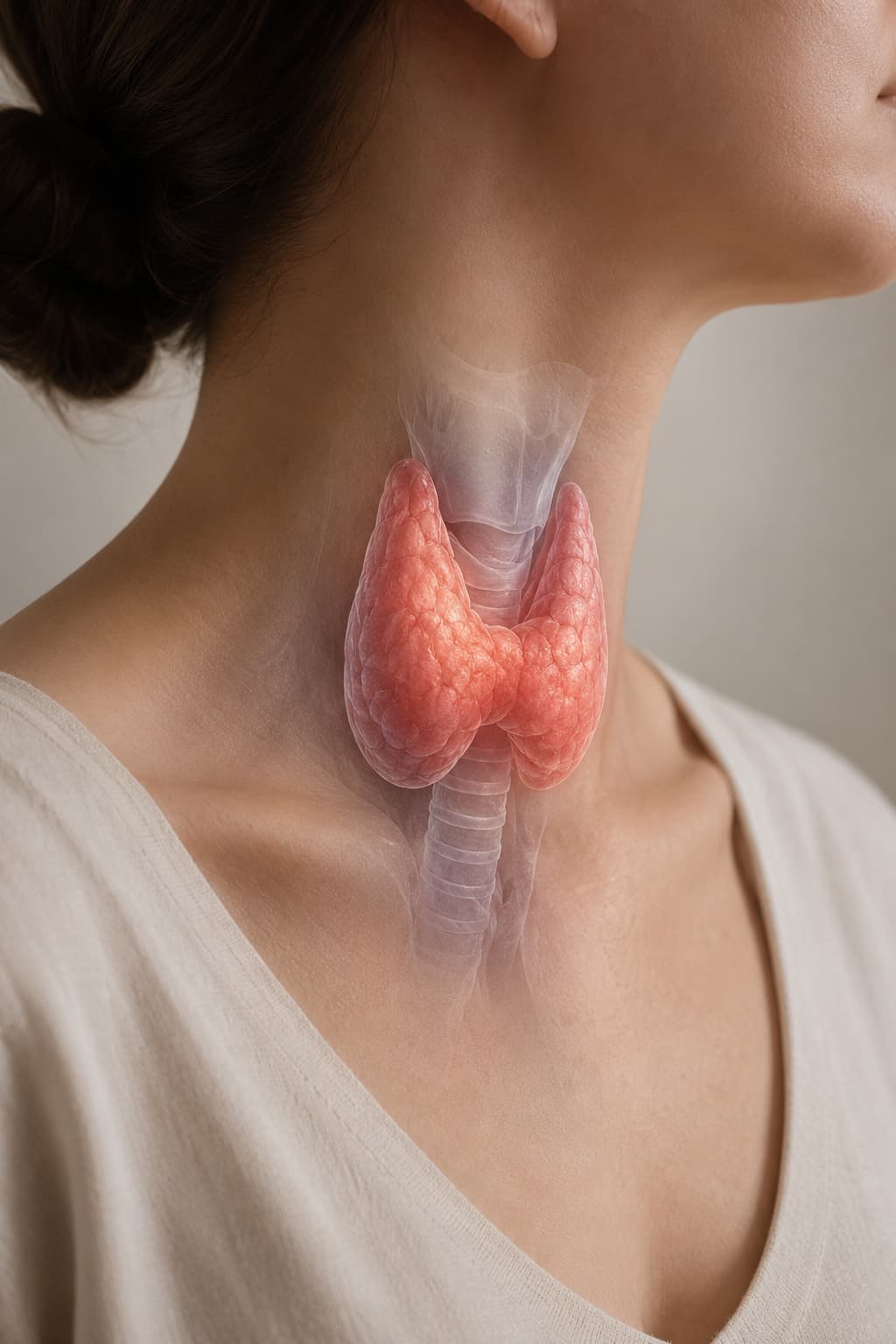
Graves' disease is an autoimmune condition that makes the thyroid gland produce too much thyroid hormone. This is called hyperthyroidism. Common symptoms include a fast heartbeat, weight loss, shaking hands, sweating, heat intolerance, anxiety, and tiredness. Some people develop an enlarged thyroid gland or thyroid eye disease. Graves' disease is diagnosed with blood tests and, when needed, imaging tests. Treatment may include medicines, radioactive iodine, or surgery. The best choice depends on the person's age, symptoms, other health conditions, pregnancy plans, and preferences. With appropriate treatment and follow-up, Graves' disease can usually be controlled successfully.
Cite as: Graves' Disease: Symptoms, Causes, Diagnosis, Treatment, and Outlook. Brisbane (AU): Exon Publications; 2024 Jun 22 [updated 2026 Aug 24].
Introduction
Graves' disease is the most common cause of an overactive thyroid gland, or hyperthyroidism. It develops when the immune system mistakenly stimulates the thyroid to make too much thyroid hormone. These hormones affect many parts of the body, so Graves' disease can cause changes in the heart, muscles, digestion, mood, body weight, and eyes. Treatment lowers thyroid hormone levels and helps prevent complications (1, 2).
What Is Graves' Disease?
Graves' disease is an autoimmune disease. Normally, the immune system protects the body from infections. In Graves' disease, it produces antibodies that attach to the thyroid-stimulating hormone (TSH) receptor on thyroid cells. These antibodies are called TSH receptor antibodies (TRAb). Some tests measure a closely related type called thyroid-stimulating immunoglobulin (TSI).
The antibodies act like TSH, the natural hormone that tells the thyroid gland to work. However, they keep stimulating the gland even when the body does not need more thyroid hormone. As a result, the thyroid produces too much thyroxine (T4) and triiodothyronine (T3). The gland may also become enlarged, causing a swelling in the neck called a goiter (1, 3).
What Causes Graves' Disease?
Graves' disease develops through a combination of genetic and environmental factors. People with close relatives who have Graves' disease or another autoimmune thyroid condition have a higher risk. Having another autoimmune disease may also increase the chance of developing it (1).
Smoking is an important preventable risk factor, particularly for thyroid eye disease. Hormonal changes and other environmental factors may also influence when Graves' disease develops. Stress or infections have been suggested as possible triggers in some people, but they do not by themselves explain why the disease occurs. Graves' disease is not contagious and cannot be passed from one person to another (1, 3).
What Are the Symptoms of Graves' Disease?
Most symptoms result from having too much thyroid hormone. The body begins to work faster than normal. Symptoms vary between people and may develop gradually or appear over a shorter period.
Common symptoms include a fast or pounding heartbeat, shaking hands, increased sweating, feeling unusually hot, nervousness, irritability, difficulty sleeping, tiredness, muscle weakness, and unexplained weight loss despite a normal or increased appetite. Some people have frequent bowel movements. Menstrual periods may become lighter or less regular.
The thyroid gland may enlarge and become visible at the front of the neck. Graves' disease can also affect the eyes and, much less commonly, the skin over the lower legs. Older adults may have less obvious symptoms and sometimes mainly develop heart problems, weakness, or weight loss (1, 2).
What Is Thyroid Eye Disease?
Thyroid eye disease is an autoimmune condition affecting the tissues around the eyes. It is closely associated with Graves' disease, although it can occasionally occur in people whose thyroid hormone levels are normal or low.
Symptoms may include dry or gritty eyes, redness, swelling around the eyes, sensitivity to light, pain or pressure behind the eyes, bulging eyes, and double vision. Severe disease can interfere with closing the eyelids or, rarely, threaten eyesight (4).
Smoking increases both the risk and severity of thyroid eye disease. Keeping thyroid hormone levels stable is also important. Mild eye symptoms may need only local treatments such as lubricating eye drops. More active or severe disease may require treatment by specialists using medicines that reduce inflammation or alter the immune response. Surgery may be needed for some people. Treatment choices and the availability of newer medicines vary between countries (4).
How Is Graves' Disease Diagnosed?
Graves' disease is usually diagnosed with blood tests. A TSH test is commonly performed first. In most people with untreated Graves' hyperthyroidism, TSH is very low because the body is trying to stop the thyroid from making more hormone. Blood levels of free T4 and sometimes T3 are increased (2, 3).
Testing for TRAb or TSI can help confirm that Graves' disease is causing the hyperthyroidism. These antibodies are particularly useful when the cause is not clear.
If further information is needed, a radioactive iodine uptake test can show how actively the thyroid is taking up iodine. Graves' disease usually causes increased uptake throughout the gland. Ultrasound with Doppler imaging can also show increased blood flow through the thyroid and may be useful when radioactive iodine testing is unsuitable. Radioactive iodine diagnostic testing is not used during pregnancy (3, 6).
How Is Graves' Disease Treated?
Treatment aims to control excess thyroid hormone and its effects on the body. The three main treatments are antithyroid medicines, radioactive iodine, and thyroid surgery. No single treatment is best for everyone. The choice depends on the severity of the disease, age, other medical conditions, thyroid size, eye disease, pregnancy plans, previous treatment, and personal preference (2, 3).
Antithyroid medicines: Medicines such as methimazole, carbimazole, or propylthiouracil reduce the thyroid's ability to make hormones. The medicines available vary by country. Methimazole or carbimazole is generally preferred for most nonpregnant adults. Treatment is often given initially for about 12–18 months, but some people remain on a low dose for several years or longer when this approach is suitable. Graves' disease may return after treatment is stopped, particularly if thyroid antibodies remain high (2, 3).
Antithyroid medicines can rarely cause serious side effects. A sudden fever or severe sore throat may be a sign of a dangerous fall in infection-fighting white blood cells and requires prompt medical assessment. Liver injury is another uncommon but important complication (2).
Medicines for symptoms: Beta blockers can reduce symptoms such as a fast heartbeat, shaking, and anxiety while thyroid hormone levels are being brought under control. They improve the effects of excess thyroid hormone but do not treat the autoimmune disease itself (2).
Radioactive iodine: Radioactive iodine is taken by mouth and is absorbed by thyroid cells. The radiation gradually destroys enough thyroid tissue to reduce hormone production. Many people later develop an underactive thyroid and need lifelong replacement thyroid hormone called levothyroxine. Radioactive iodine is not used during pregnancy or breastfeeding. It can worsen active thyroid eye disease in some people, so eye symptoms and risk factors must be considered before treatment (3, 4).
Surgery: Surgery usually involves removing all or nearly all of the thyroid gland. It provides rapid and reliable control of hyperthyroidism and may be preferred in people with a very large thyroid, certain thyroid nodules, or other reasons that make medicines or radioactive iodine less suitable. After total thyroid removal, lifelong levothyroxine treatment is required. Thyroid surgery should be performed by a surgeon experienced in thyroid operations because complications can include injury to the nerves controlling the voice and damage to the nearby parathyroid glands that regulate calcium levels (2, 3).
What Are the Possible Complications of Graves' Disease?
Untreated or poorly controlled hyperthyroidism can place extra strain on the heart. It may cause abnormal heart rhythms, including atrial fibrillation, and can contribute to heart failure in susceptible people. Long-standing excess thyroid hormone can also weaken bones and muscles (1, 2).
A rare but dangerous complication is thyroid storm, in which severe hyperthyroidism causes a sudden breakdown in normal body function. Symptoms may include a very high temperature, extreme agitation or confusion, vomiting, severe weakness, and a very fast heartbeat. Thyroid storm is a medical emergency requiring immediate hospital treatment (2).
Complications can usually be reduced by bringing thyroid hormone levels under control and maintaining regular follow-up.
How Does Graves' Disease Affect Pregnancy?
Graves' disease requires special management before and during pregnancy because both uncontrolled hyperthyroidism and its treatments can affect the mother and developing baby.
People with Graves' disease who are planning pregnancy should discuss treatment before conception. The 2026 American Thyroid Association guideline recommends careful selection of antithyroid treatment around conception and during early pregnancy. Propylthiouracil may be used when antithyroid treatment is required during the first part of pregnancy because methimazole and carbimazole have been associated with particular birth defects when taken during early fetal development. Treatment should use the lowest effective dose and requires close thyroid blood-test monitoring (6).
TRAb or TSI antibodies can cross the placenta, so antibody testing may be needed during pregnancy. Radioactive iodine must not be given during pregnancy. Management should therefore be individualized and coordinated between clinicians experienced in thyroid disease and pregnancy (6).
What Is the Outlook for People With Graves' Disease?
The outlook is generally good when Graves' disease is diagnosed and treated. Antithyroid medicines can produce remission in some people, meaning thyroid hormone levels remain normal after treatment is stopped. Others have recurrent disease and choose longer-term medication, radioactive iodine, or surgery (2, 3).
People who become hypothyroid after radioactive iodine or surgery can usually maintain normal thyroid hormone levels with daily levothyroxine. Thyroid eye disease may follow a different course from the thyroid condition itself and can require separate follow-up and treatment (4).
Because Graves' disease varies considerably between individuals, long-term care focuses on keeping thyroid hormone levels stable and adjusting treatment when circumstances change.
Conclusion
Graves' disease is an autoimmune disorder in which antibodies overstimulate the thyroid gland, causing hyperthyroidism. It can affect many parts of the body and may also cause thyroid eye disease. Blood tests usually establish the diagnosis. Antithyroid medicines, radioactive iodine, and surgery are effective treatment options, with the choice based on individual circumstances. Pregnancy and significant eye disease require special management. With appropriate treatment and monitoring, most people with Graves' disease can achieve good long-term control.
References
- Lanzolla G, Marinò M, Menconi F. Graves disease: latest understanding of pathogenesis and treatment options. Nat Rev Endocrinol. 2024;20(11):647-660. https://doi.org/10.1038/s41574-024-01016-5
- Shah R, Adamson SE, Jasim S. Management aspects of medical therapy in Graves disease. Endocr Pract. 2025;31(4):536-546. https://doi.org/10.1016/j.eprac.2024.12.012
- Kahaly GJ, Bartalena L, Hegedüs L, Leenhardt L, Poppe K, Pearce SH. 2018 European Thyroid Association guideline for the management of Graves' hyperthyroidism. Eur Thyroid J. 2018;7(4):167-186. https://doi.org/10.1159/000490384
- Bartalena L, Kahaly GJ, Baldeschi L, et al. The 2021 European Group on Graves' orbitopathy (EUGOGO) clinical practice guidelines for the medical management of Graves' orbitopathy. Eur J Endocrinol. 2021;185(4):G43-G67. https://doi.org/10.1530/EJE-21-0479
- Hoang TD, Stocker DJ, Chou EL, Burch HB. 2022 update on clinical management of Graves disease and thyroid eye disease. Endocrinol Metab Clin North Am. 2022;51(2):287-304. https://doi.org/10.1016/j.ecl.2021.12.004
- Korevaar TIM, Leung AM, Alexander EK, et al. American Thyroid Association 2026 guidelines for thyroid disease in preconception, pregnancy, and postpartum. Thyroid. 2026;36(5):481-544. https://doi.org/10.1177/10507256261445624
This article is part of the 'Public Education Series' initiative by Exon Publications.
Disclaimer: This article is for general educational purposes only and does not constitute medical advice, diagnosis, or treatment. Consult a qualified healthcare professional about personal health concerns.
Note on External Links: External links were checked and accessible when this article was published. Their content and availability may change over time and are outside the control of Exon Publications.
Explore Other Articles in the Public Education Series
Downloads
Article Details

This work is licensed under a Creative Commons Attribution-NonCommercial-NoDerivatives 4.0 International License.