
Genital Warts: Causes, Symptoms, Transmission, Diagnosis, Treatment, and Prevention
Article Sidebar
Main Article Content
Genital warts are small growths that appear on or around the genitals or anus. They are caused by certain types of human papillomavirus (HPV), a common virus passed mainly through sexual skin-to-skin contact. Most genital warts are harmless and do not cause cancer, but they may cause itching, discomfort, or emotional distress. Some disappear without treatment, while others need prescription medicines or removal procedures. Treatment removes visible warts but does not always eliminate the virus, so warts can return. HPV vaccination, condom use, and early recognition can help reduce the risk of genital warts.
Cite as: Genital Warts: Causes, Symptoms, Transmission, Diagnosis, Treatment, and Prevention. Brisbane (AU): Exon Publications; 2024 Jul 14 [updated 2026 Oct 17].
Introduction
Genital warts are a common sexually transmitted infection (STI) that can affect people of any sex. They may appear as tiny bumps or larger growths on the skin around the genitals or anus. Although they are usually harmless, they can cause discomfort and concern about sexual health. Knowing what causes genital warts, how they spread, and which treatments are available can help people make informed decisions about their care (1).
What Causes Genital Warts?
Genital warts are caused by certain types of human papillomavirus (HPV). There are many types of HPV, but about 90% of genital warts are caused by HPV types 6 and 11. These are called low-risk HPV types because they rarely cause cancer (1, 2).
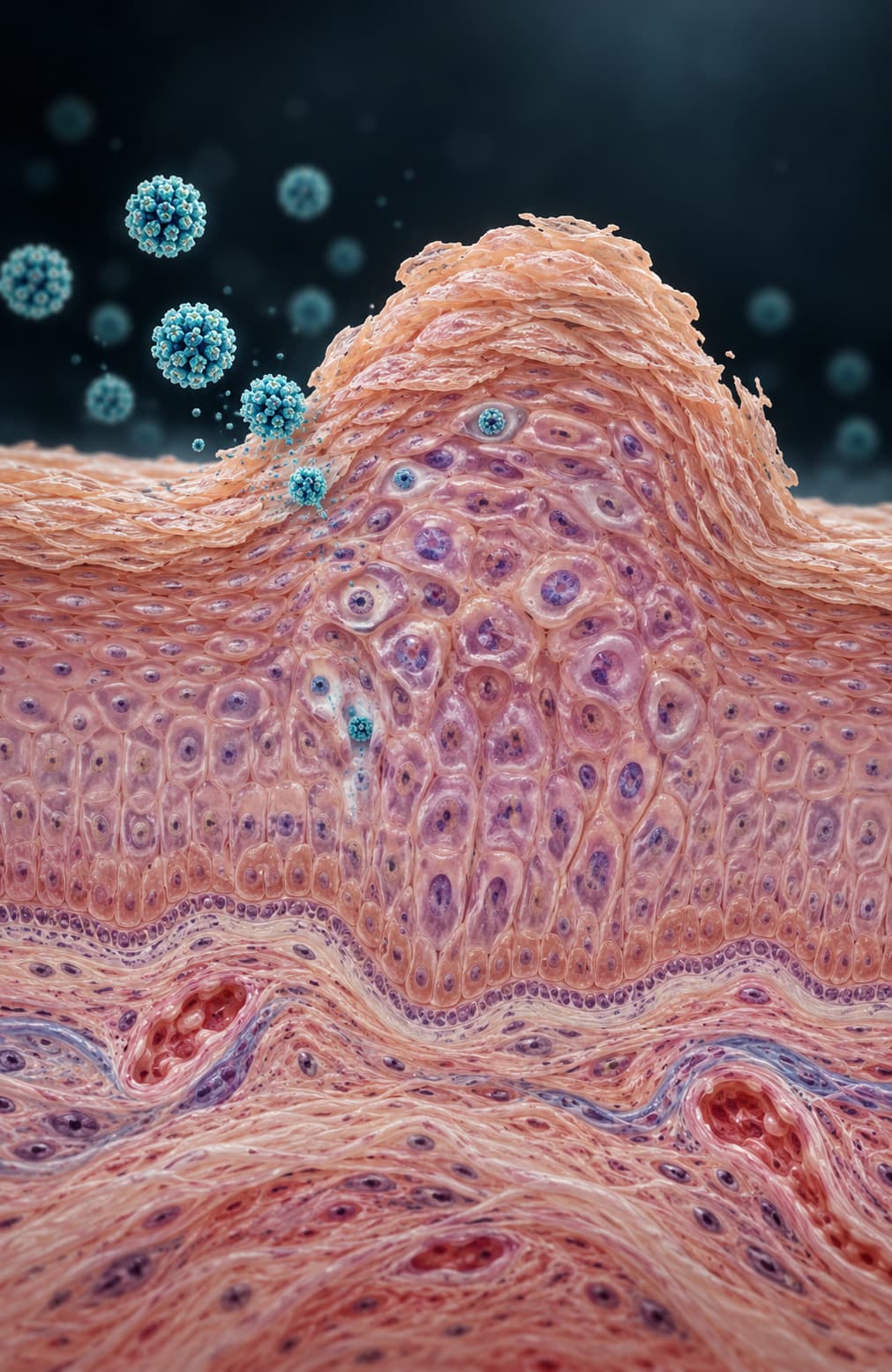
HPV infects cells in the outer layer of the skin or the moist surfaces lining parts of the body. In some people, the infection causes these cells to grow into small bumps or warts. In others, the virus causes no visible changes.
Most sexually active people are exposed to HPV at some point in their lives. However, many never develop genital warts or know that they have been infected.
How Do Genital Warts Spread?
Genital warts spread mainly through direct skin-to-skin contact during vaginal, anal, or other intimate sexual activity. Penetration is not required for HPV transmission. The virus can pass between partners even when no warts are visible (1, 2).
Genital warts may appear weeks, months, or even years after HPV infection. For this reason, it is usually impossible to determine when the infection occurred or which partner transmitted it.
HPV infection in a long-term relationship does not necessarily mean that either partner has been unfaithful. The virus may have been present without symptoms for a long time.
Genital HPV is not spread through ordinary social contact, such as hugging, shaking hands, or sharing meals.
What Do Genital Warts Look Like?
Genital warts may appear as single bumps or groups of small growths. They can be flat, raised, smooth, or rough. Some have a cauliflower-like surface. Their color may be similar to the surrounding skin, pink, or slightly darker (1-3).
They can develop in several areas, including the penis, scrotum, vulva, vaginal opening, skin between the genitals and anus, and around the anus. Less commonly, warts occur inside the vagina, on the cervix, inside the anal canal, or near the opening of the urethra, the tube that carries urine out of the body.
Most genital warts do not cause pain. However, some people experience itching, irritation, discomfort during sex, or occasional bleeding when the warts are rubbed or injured.
Not every bump in the genital area is a wart. Normal skin variations, cysts, and other infections can look similar. Unlike genital warts, genital herpes typically causes blisters or painful sores.
Who Is More Likely to Develop Genital Warts?
Anyone exposed to the types of HPV that cause genital warts can develop them. However, some factors increase the likelihood of infection or visible wart formation (1-3).
People who have not received HPV vaccination may be more likely to acquire the wart-causing HPV types. Having new or multiple sexual partners can increase the chance of exposure, although infection can occur even with only one lifetime sexual partner.
A weakened immune system also affects the body's ability to control HPV. People living with HIV or taking medicines that suppress the immune system may develop larger or more numerous warts. Their warts may also be harder to treat.
HPV exposure does not always lead to visible warts. Whether warts develop depends partly on how the immune system responds to the infection.
How Are Genital Warts Diagnosed?
Genital warts are usually diagnosed by examining the affected skin. A healthcare professional can often identify them from their appearance and location without laboratory testing (1-3).
If a growth looks unusual or the diagnosis is uncertain, a biopsy may be needed. A biopsy involves removing a small piece of tissue and examining it under a microscope. This is particularly useful when a growth is unusually dark, firm, ulcerated, bleeding, or not responding to treatment.
HPV DNA testing is not recommended for diagnosing genital warts because the result does not reliably confirm that a visible growth is a wart or change how it should be treated.
However, HPV tests used for cervical cancer screening have a different purpose. They look for high-risk HPV types associated with abnormal cervical cells and cancer.
Testing for other sexually transmitted infections may also be offered because more than one infection can occur at the same time.
Do Genital Warts Cause Cancer?
Typical genital warts are benign, meaning they are not cancer. HPV types 6 and 11, which cause most genital warts, are considered low-risk types (1, 2).
However, other HPV types, especially HPV 16 and 18, can cause changes in cells that may eventually lead to cancer. These high-risk types are associated with cancers of the cervix, anus, penis, vulva, vagina, and parts of the throat.
A person can have more than one HPV type at the same time. Therefore, having genital warts does not mean that someone has cancer, but it also does not rule out infection with a high-risk HPV type.
For people who have a cervix, routine cervical screening remains important according to national recommendations. Having genital warts alone does not mean that screening must be performed more often. More information about HPV-related cancer is available in the Exon article on cervical cancer.
Can Genital Warts Go Away Without Treatment?
Yes. Some genital warts disappear without treatment as the immune system controls the HPV infection. Others remain unchanged or grow larger. New warts may also appear over time (1-3).
For small warts that cause no symptoms, waiting and observing may be a reasonable option after the diagnosis has been confirmed. Some warts disappear within a year, although the time varies greatly between individuals.
Treatment is often chosen when warts cause discomfort, increase in size or number, or affect a person's confidence or sexual well-being.
The decision to treat depends on the location and extent of the warts, symptoms, personal preference, and any other health conditions.
How Are Genital Warts Treated?
Genital warts can be treated with prescription medicines or procedures that remove or destroy the visible growths. The best approach depends on the wart size, number, location, treatment availability, and individual needs. No single treatment works best for everyone (1-5).
Imiquimod cream: Imiquimod stimulates the body's local immune response to help clear warts. It is applied directly to affected external skin according to a prescribed schedule. Treatment may continue for several weeks. Redness, irritation, and soreness can occur.
Podofilox or podophyllotoxin: This medicine destroys the cells that make up the wart. It is usually applied to external warts for several days, followed by a break before the treatment cycle is repeated. It can irritate healthy skin and must be used exactly as directed.
Sinecatechins ointment: This prescription treatment contains substances extracted from green tea leaves. It is applied to certain external genital warts. Availability differs between countries, and local skin reactions are common.
Cryotherapy: A healthcare professional applies liquid nitrogen to freeze and destroy the wart tissue. The treated area may become sore or develop a blister. Several treatment sessions may be needed.
Surgical or electrical removal: Warts may be cut away, destroyed using an electrical current, or removed with laser treatment. These methods may be useful for large, extensive, or difficult-to-treat warts. Local anesthesia may be used to reduce pain.
Chemical treatment: A clinician may apply a strong acid, such as trichloroacetic acid, directly to the wart. The acid destroys the affected tissue while the surrounding skin is protected.
Warts inside the vagina, cervix, urethra, or anal canal often need specialist assessment and treatment.
Ordinary over-the-counter wart removers intended for the hands or feet should never be used on genital skin. They can cause serious irritation or burns.
Treatment usually improves or removes visible warts, but it does not guarantee that HPV has been completely eliminated from the body.
Can Genital Warts Return After Treatment?
Yes. Genital warts can return after successful treatment because HPV may remain in nearby skin cells even when no growths are visible. Recurrence is particularly common during the first three months after treatment (1, 2).
The chance of recurrence varies between individuals. People with weakened immune systems may experience more frequent or persistent warts.
Most treatments produce a response within a few months. If warts remain after a full course of treatment, a different medicine or removal procedure may be considered.
Over time, the immune system controls most HPV infections, and the virus may become undetectable. However, there is no routine test that can reliably establish whether a person with previously treated genital warts can still transmit HPV.
How Can Genital Warts Be Prevented?
HPV vaccination is one of the most effective ways to prevent genital warts. The nine-valent HPV vaccine protects against HPV types 6 and 11, which cause most genital warts, as well as several high-risk HPV types associated with cancer (1, 2, 6).

Vaccination works best before exposure to HPV, which is why many countries recommend it during adolescence. Eligibility, recommended age groups, and vaccination schedules vary between countries.
HPV vaccination prevents new infections with the HPV types covered by the vaccine. It does not treat an existing HPV infection or remove genital warts. However, people who have already had genital warts may still benefit from protection against other HPV types they have not acquired.
Condoms can lower the chance of HPV transmission when used correctly and consistently. However, they do not provide complete protection because HPV can infect skin that a condom does not cover.
Reducing exposure to HPV through safer sexual practices and avoiding direct contact with visible warts can also help lower the risk. Vaccination programs have already led to substantial reductions in genital warts in several countries.
What Should Someone Tell Their Sexual Partner?
People who have genital warts are encouraged to inform their current sexual partners. This allows partners to understand the infection and make informed decisions about their sexual health (1).
A partner may already have HPV without visible symptoms. Routine HPV testing of partners is not recommended solely because someone has genital warts. However, an examination may be useful if a partner notices unusual growths, and screening for other sexually transmitted infections may be appropriate.
Open communication can also reduce misunderstandings about how HPV spreads and how long it may remain unnoticed.
Can Genital Warts Affect Pregnancy?
Genital warts are usually not harmful to pregnancy, but hormonal and immune changes can sometimes make them grow faster or become more easily irritated. Some warts may shrink after childbirth (1, 2, 4).
Treatment during pregnancy requires particular care. Podofilox, podophyllotoxin, and sinecatechins should not be used during pregnancy. Imiquimod is generally avoided because safety information is limited. A clinician may recommend another treatment or postpone removal until after delivery.
Very rarely, HPV types 6 and 11 are associated with wart-like growths in a child's airway, called recurrent respiratory papillomatosis. However, cesarean delivery is not recommended solely to prevent HPV transmission. It may be needed when large genital warts block the birth canal or create a risk of excessive bleeding during delivery.
When Should Genital Warts Be Medically Evaluated?
Any new or unexplained growth on the genitals or around the anus should be assessed to confirm its cause. This is particularly important when a growth bleeds without injury, develops an open sore, changes rapidly, or becomes unusually painful (1-3).
Medical evaluation is also important when warts do not respond to treatment, occur during pregnancy, or develop in someone with a weakened immune system.
Most genital warts are harmless, but a proper diagnosis helps distinguish them from other infections and less common conditions that require different treatment.
Conclusion
Genital warts are common, usually harmless growths caused by certain types of HPV. They can spread through intimate skin contact even when symptoms are absent. Many disappear naturally, while others can be treated with prescription medicines or removal procedures. Warts may return after treatment, but the body's immune system often brings HPV under control over time. Vaccination and safer sexual practices offer important protection. Understanding the condition can help people manage symptoms, protect their partners, and make informed healthcare decisions.
Explore Other Articles in the Public Education Series
- Human Papillomavirus (HPV): Public Education
- Pap Smear: What It Is, When to Get Tested, and What the Results Mean
- Penile Cancer Causes, Symptoms, Diagnosis, and Treatment Options Explained
References
- Workowski KA, Bachmann LH, Chan PA, et al. Sexually transmitted infections treatment guidelines, 2021. MMWR Recomm Rep. 2021;70(4):1-187. https://doi.org/10.15585/mmwr.rr7004a1
- Nugent D, Apoola A, Coleman H, et al. British association for sexual health and HIV national guideline for the management of anogenital warts in adults (2024). Int J STD AIDS. 2024;35(7):498-509. https://doi.org/10.1177/09564624241233338
- Gilson R, Nugent D, Werner RN, Ballesteros J, Ross J. 2019 IUSTI-Europe guideline for the management of anogenital warts. J Eur Acad Dermatol Venereol. 2020;34(8):1644-1653. https://doi.org/10.1111/jdv.16522
- World Health Organization. Recommendations for the treatment of Trichomonas vaginalis, Mycoplasma genitalium, Candida albicans, bacterial vaginosis and human papillomavirus (anogenital warts). Geneva: World Health Organization; 2024. https://www.who.int/publications/i/item/9789240096370
- Barton S, Wakefield V, O'Mahony C, Edwards S. Effectiveness of topical and ablative therapies in treatment of anogenital warts: a systematic review and network meta-analysis. BMJ Open. 2019;9(10). https://doi.org/10.1136/bmjopen-2018-027765
- Drolet M, Bénard É, Pérez N, Brisson M; HPV Vaccination Impact Study Group. Population-level impact and herd effects following the introduction of human papillomavirus vaccination programmes: updated systematic review and meta-analysis. Lancet. 2019;394(10197):497-509. https://doi.org/10.1016/S0140-6736(19)30298-3
This article is part of the 'Public Education Series' initiative by Exon Publications.
Disclaimer: This article is for general educational purposes only and does not constitute medical advice, diagnosis, or treatment. Consult a qualified healthcare professional about personal health concerns.
Note on External Links: External links were checked and accessible when this article was published. Their content and availability may change over time and are outside the control of Exon Publications.
Downloads
Article Details

This work is licensed under a Creative Commons Attribution-NonCommercial-NoDerivatives 4.0 International License.