
Long COVID: Symptoms, Causes, Diagnosis, Treatment, and Recovery
Article Sidebar
Main Article Content
Long COVID is a chronic condition that can develop after infection with SARS-CoV-2, the virus that causes COVID-19. Symptoms may continue from the original illness, appear after recovery, disappear and return, or change over time. Common problems include severe tiredness, shortness of breath, brain fog, sleep problems, pain, dizziness, and worsening of symptoms after physical or mental activity. There is no single test that confirms Long COVID and no medicine that cures it. Treatment focuses on the person's most troublesome symptoms, associated medical conditions, careful rehabilitation, and improving daily function and quality of life.
Cite as: Long COVID: Symptoms, Causes, Diagnosis, Treatment, and Recovery. Brisbane (AU): Exon Publications; 2024 [updated 2026 Sep 29].
Introduction
Most people recover from COVID-19, but some continue to experience health problems for months or years after the original infection. This condition is commonly called Long COVID. It is also known as post-COVID condition or post-acute sequelae of SARS-CoV-2 infection.
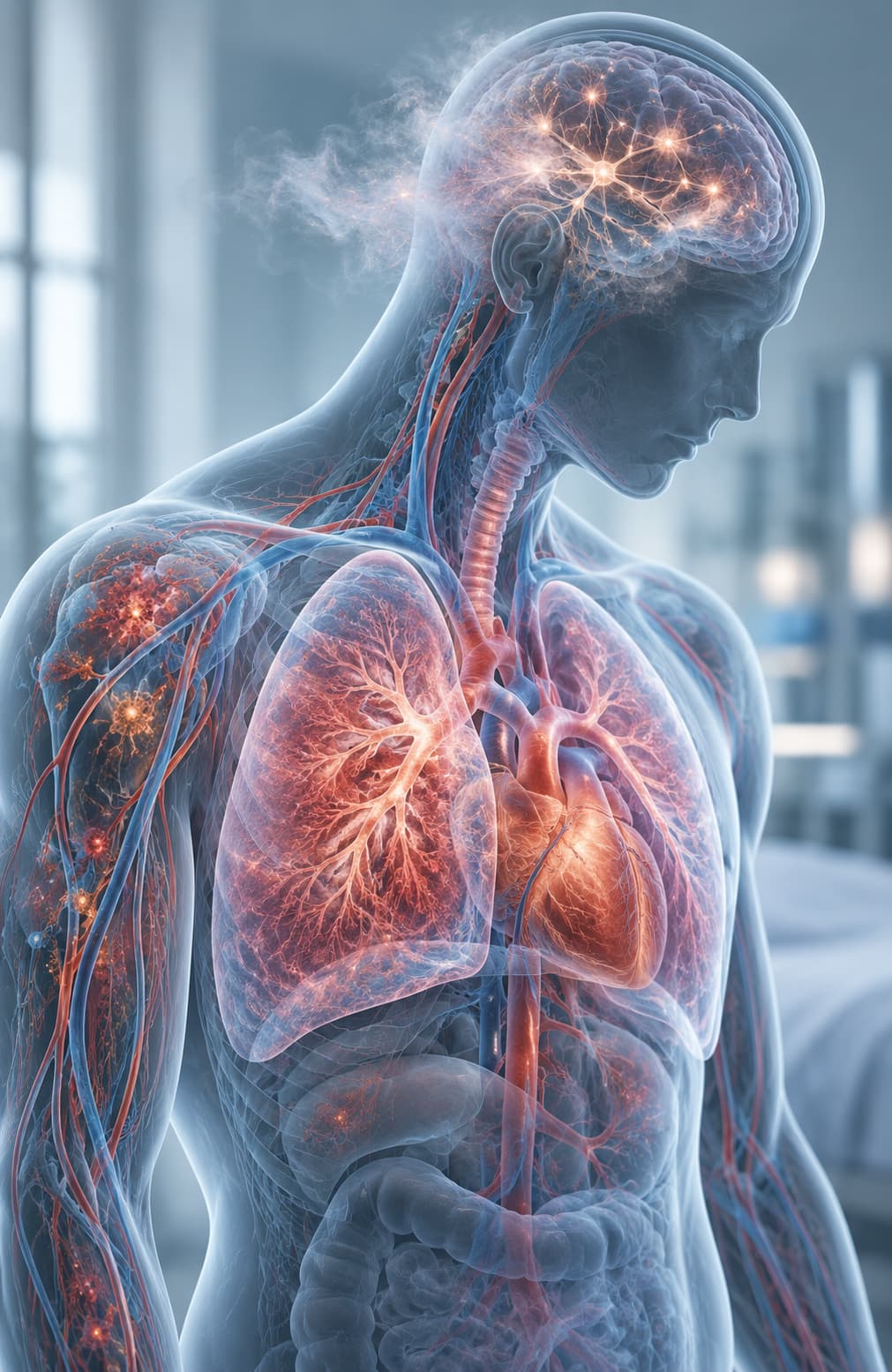
Long COVID is not one single disease with one set of symptoms. It can affect the brain, lungs, heart, blood vessels, nervous system, digestive system, muscles, and other parts of the body. Symptoms may be mild in one person and disabling in another. Some people gradually improve, while others have symptoms that come and go or remain for long periods (1).
What Is Long COVID?
Long COVID is a chronic condition that develops after SARS-CoV-2 infection and continues beyond the expected recovery from the initial illness.
Definitions vary slightly between health organizations, but Long COVID generally refers to new, continuing, or recurring health problems that are present about three months or more after the original infection.
A person does not need to have been hospitalized with COVID-19 to develop Long COVID. It can follow severe, moderate, mild, or even initially unnoticed infection (1, 2).
Long COVID can involve one symptom or many symptoms affecting several body systems. The symptoms may remain constant, gradually improve, worsen, or disappear and later return.
Who Can Develop Long COVID?
Anyone who has had SARS-CoV-2 infection can develop Long COVID, including children and people who were previously healthy.
The risk is not the same for everyone. Long COVID has been reported more often in people who had severe acute COVID-19, required hospitalization, had underlying health conditions, or experienced repeated infections.
Women appear to have a higher risk than men in many studies, although the reasons are still being investigated.
Long COVID can also develop after a mild infection. This is important because a person does not need to have been seriously ill during the original infection to experience substantial long-term symptoms later (1).
Vaccination reduces the risk but does not completely prevent Long COVID (5).
What Are the Symptoms of Long COVID?
Long COVID can cause a very wide range of symptoms. Different people may experience very different combinations.
Common symptoms include:
- persistent tiredness or lack of energy
- shortness of breath
- cough
- difficulty thinking or concentrating
- memory problems
- headaches
- sleep problems
- muscle or joint pain
- chest discomfort
- fast or pounding heartbeat
- dizziness or lightheadedness
- changes in smell or taste
- abdominal pain
- nausea
- diarrhea or constipation
- anxiety or low mood
Some people develop symptoms mainly involving one organ system, while others have symptoms affecting several parts of the body.
Symptoms can also fluctuate. A person may feel considerably better on one day and worse on another without an obvious reason (1, 2).
What Is Brain Fog in Long COVID?
"Brain fog" is a common informal term for cognitive problems reported by people with Long COVID.
A person may have difficulty concentrating, remembering information, following conversations, finding words, planning tasks, or thinking as quickly as before.
These symptoms are real even when standard brain scans or routine blood tests are normal. Cognitive problems may become more noticeable after mental effort, poor sleep, physical exertion, or a demanding day.
Management may include treating sleep problems, pain, headaches, anxiety, depression, or other conditions that can worsen concentration. Some people also benefit from occupational therapy, cognitive strategies, rest breaks, and adjusting the amount of mental work performed at one time (1, 2).
What Is Post-Exertional Malaise?
Post-exertional malaise, also called post-exertional symptom exacerbation, is one of the most important features of Long COVID in some people.
It means that symptoms become significantly worse after physical, mental, emotional, or sometimes even social activity that would previously have been manageable.
The worsening may not occur immediately. It can begin hours later or the following day and may last for several days or longer.
Symptoms that worsen can include fatigue, brain fog, pain, dizziness, flu-like feelings, sleep disturbance, and problems standing or walking.
A 2025 systematic review found that post-exertional malaise is common in people with post-COVID condition and may influence recovery and rehabilitation (4).
Recognizing post-exertional malaise is important because repeatedly pushing beyond a person's energy limits can trigger further symptom flares.
Does Exercise Help Long COVID?
Exercise is not a single treatment that is suitable for everyone with Long COVID.
Some people who have become weak or physically deconditioned after illness may benefit from carefully planned rehabilitation and gradually increasing activity.
However, this approach is not suitable for everyone.
People with post-exertional malaise can become worse when activity is increased too quickly or according to a fixed exercise schedule. Rehabilitation should therefore first assess how a person responds to physical and mental exertion.
For people with post-exertional malaise, management often focuses on staying within tolerable energy limits and avoiding repeated cycles of doing too much followed by prolonged worsening.
For people without post-exertional malaise, an individualized rehabilitation program may include carefully adjusted physical activity, breathing exercises, strength work, or other therapies depending on the symptoms and medical findings (2-4).
What Causes Long COVID?
There is unlikely to be one cause that explains every case of Long COVID.
Researchers are investigating several biological processes that may occur separately or together.
Persistent viral material: Parts of SARS-CoV-2, or possibly ongoing viral activity in particular tissues, may continue to stimulate the immune system after the acute infection has ended.
Immune system changes: Some people show prolonged or abnormal immune activity after infection. Autoimmunity, in which the immune system reacts against the body's own tissues, is also being investigated.
Blood vessel changes: Inflammation and abnormal function of the cells lining small blood vessels may affect circulation and oxygen delivery to tissues.
Nervous system dysfunction: Some people develop problems with the autonomic nervous system, which automatically controls heart rate, blood pressure, digestion, sweating, and other functions.
Mitochondrial and metabolic changes: Researchers are studying whether changes in how cells produce and use energy contribute to fatigue and poor exercise tolerance.
Organ injury: People who had severe acute COVID-19 may also have lasting damage to the lungs, heart, kidneys, brain, or other organs.
Long COVID is therefore increasingly understood as a group of overlapping biological problems rather than one simple mechanism (1).
What Is Dysautonomia in Long COVID?
The autonomic nervous system controls body functions that normally happen without conscious effort, including heart rate, blood pressure, temperature regulation, digestion, and sweating.
Some people with Long COVID develop autonomic dysfunction, or dysautonomia.
Symptoms can include dizziness when standing, racing heartbeat, faintness, unusual sweating, digestive symptoms, difficulty tolerating heat, and extreme fatigue.
One recognized form is postural orthostatic tachycardia syndrome, or POTS. In POTS, the heart rate rises excessively after a person stands up and this is accompanied by symptoms such as dizziness, palpitations, weakness, or brain fog.
Not every person with dizziness or a fast heartbeat has POTS. Diagnosis requires an appropriate clinical assessment.
Treatment may include increased fluid intake, adjustments to salt intake when medically appropriate, compression garments, physical measures to improve blood return to the heart, and medicines in selected patients (1, 2).
How Is Long COVID Diagnosed?
There is currently no single blood test, scan, or other laboratory test that can prove that a person has Long COVID.
Diagnosis is based mainly on the person's medical history, symptoms, examination, previous COVID-19 illness or likely exposure, and appropriate testing to rule out other explanations (2).
A previous positive COVID-19 test can support the diagnosis but is not always required. Many people were infected when testing was unavailable, were never tested, or had a negative test despite having COVID-19.
Normal routine test results also do not automatically mean that a person's symptoms are not real or are not related to Long COVID.
The purpose of medical evaluation is therefore not simply to "find the Long COVID test." It is to understand the person's pattern of illness and identify any treatable conditions.
What Tests May Be Used?
Testing should be guided by the person's symptoms rather than applying the same set of tests to everyone.
Blood tests may be used to look for anemia, thyroid disease, diabetes, inflammation, vitamin deficiencies, liver or kidney problems, and other possible causes of fatigue or illness.
Shortness of breath may lead to lung function testing, chest imaging, oxygen measurements, or other respiratory investigations.
Chest pain, palpitations, or dizziness may require an electrocardiogram, heart monitoring, blood pressure measurements while lying and standing, or other cardiovascular tests.
Neurological symptoms may require a detailed neurological examination and, in selected cases, further testing.
Sleep problems, mental health conditions, medication effects, and other illnesses should also be considered because they can occur alongside Long COVID and may be treatable (2).
How Is Long COVID Treated?
There is currently no single medicine that cures Long COVID.
Treatment is individualized according to the symptoms, medical findings, and effect of the illness on daily life.
The main goals are to reduce troublesome symptoms, treat specific medical conditions, improve function when possible, prevent worsening, and support quality of life.
Care may involve a primary-care clinician together with specialists, physiotherapists, occupational therapists, psychologists, rehabilitation professionals, or other health professionals depending on the person's needs.
A systematic review of Long COVID treatments found that evidence for many proposed therapies remains limited. Some interventions may help selected symptoms, but no treatment has been shown to work for every person with Long COVID (3).
How Are Fatigue and Low Energy Managed?
Fatigue in Long COVID can be very different from ordinary tiredness.
Rest may not completely relieve it, and even routine activities such as showering, preparing food, reading, working, or having a conversation may require substantial effort.
Management begins by looking for other treatable causes such as anemia, thyroid disease, sleep problems, medication effects, pain, depression, or nutritional deficiencies.
For people with post-exertional malaise, energy management is especially important. This is sometimes called pacing.
Pacing involves balancing activity and rest so that essential tasks can be completed without repeatedly triggering severe symptom worsening.
People may benefit from dividing larger tasks into smaller steps, sitting rather than standing when possible, taking breaks before becoming exhausted, and planning demanding activities around periods of greater energy.
How Are Breathing Problems Managed?
Shortness of breath after COVID-19 can have several causes.
Some people have residual lung injury from the original infection. Others have asthma, abnormal breathing patterns, reduced physical conditioning, heart problems, anemia, or autonomic dysfunction.
Treatment therefore depends on identifying the likely cause.
Pulmonary rehabilitation may benefit selected people, especially those with lasting respiratory impairment after severe COVID-19. Breathing retraining can also help some people with abnormal breathing patterns.
However, rehabilitation must still be adjusted when post-exertional malaise is present.
New or worsening shortness of breath should not automatically be attributed to Long COVID because conditions such as blood clots, heart disease, asthma, infection, or other lung disorders may require separate treatment.
How Are Pain, Headaches, and Sleep Problems Managed?
Long COVID can be associated with headaches, muscle pain, joint pain, nerve-related pain, and sleep disturbance.
These problems are usually treated using established approaches for the individual symptom.
Treatment may include appropriate pain medicines, migraine treatment, sleep management, physical measures, and treatment of conditions that contribute to poor sleep.
Good sleep habits can be helpful, but persistent sleep problems may require investigation for disorders such as sleep apnea.
Pain and poor sleep can also worsen fatigue and cognitive difficulties, so addressing them may improve several symptoms at the same time.
How Are Anxiety and Depression Managed?
Living with a chronic illness can affect emotional well-being, particularly when symptoms interfere with work, family life, independence, or social activities.
Some people with Long COVID develop anxiety, depression, or other mental health problems. These deserve appropriate treatment in the same way as they would in any other medical condition.
However, Long COVID should not be assumed to be caused by anxiety or depression simply because routine medical tests are normal.
Mental health support can be valuable as part of comprehensive care without implying that physical symptoms are imaginary or psychological in origin (1, 2).
Are There Medicines Specifically for Long COVID?
No medicine is currently approved specifically to cure Long COVID.
Medicines can still be useful for treating particular symptoms or conditions. Examples include treatment for asthma, migraine, sleep disorders, pain, blood pressure problems, POTS, depression, or other conditions when clinically appropriate.
Many experimental treatments have been proposed, including antiviral, anti-inflammatory, immune-modifying, anticoagulant, and metabolic therapies.
Research is continuing, but evidence is not yet strong enough to recommend most experimental treatments routinely (3).
People should be cautious about expensive treatments promoted as Long COVID cures when convincing evidence of safety and effectiveness is lacking.
Can Long COVID Be Prevented?
The only way to completely avoid Long COVID from a particular infection is to avoid that SARS-CoV-2 infection.
Because complete avoidance is not always possible, reducing the risk of infection and severe COVID-19 can also reduce the overall risk.
COVID-19 vaccination is associated with a lower likelihood of developing Long COVID. A 2024 systematic review and meta-analysis found that vaccination before infection was associated with lower odds of Long COVID, although vaccination does not eliminate the risk entirely (5).
Measures that reduce exposure to respiratory viruses can also reduce opportunities for infection.
People at higher risk of severe acute COVID-19 should seek medical advice promptly when infected because early antiviral treatment may be appropriate. Treatment of the acute infection has clear benefits for eligible high-risk patients, although its exact effect on later Long COVID risk continues to be studied.
Can Long COVID Occur After Reinfection?
Yes. Long COVID can follow a first infection or a later reinfection.
A person who recovered completely from one infection can still develop Long COVID after another.
People who already have Long COVID may also experience changes in symptoms after reinfection.
Because each infection provides another opportunity for post-infectious complications, reducing repeated infections remains relevant even for people who have previously had COVID-19.
How Long Does Long COVID Last?
There is no single recovery timeline.
Some people improve substantially within several months. Others improve slowly over one or more years. A smaller group continues to experience substantial symptoms for long periods.
Symptoms can also follow different courses. Some remain steadily present, while others fluctuate or relapse.
A 2026 prospective study following thousands of people attending a specialist Long COVID service found that recovery patterns varied considerably and that substantial health problems persisted for some people over several years (6).
This variability makes it difficult to predict an individual's recovery from the duration or severity of symptoms alone.
Can People Recover From Long COVID?
Yes. Many people improve, and some recover completely.
Recovery may be gradual rather than sudden. A person may first notice that symptom flares become less severe, daily activity becomes easier, or recovery after exertion becomes faster.
Other people continue to experience substantial limitations.
Long COVID is still a relatively new condition, and researchers are continuing to study its long-term course. The fact that some people have persistent illness for several years does not mean that further improvement cannot occur.
Management should therefore balance realistic expectations with continued treatment of symptoms, avoidance of preventable deterioration, and support for function and quality of life.
Living With Long COVID
Long COVID can affect work, education, relationships, exercise, household tasks, and personal independence.
People with fluctuating symptoms may need to adjust daily plans according to their current capacity. Occupational therapy can help identify ways to conserve energy, modify tasks, or adapt work and home activities.
Some people may need temporary or long-term changes to working hours, workloads, mobility, or other responsibilities.
Keeping a simple record of activities and symptoms can sometimes help identify patterns, particularly delayed worsening after exertion.
The goal is not necessarily to return immediately to the amount of activity that was possible before COVID-19. A safer approach is to understand current limits and build daily life around what can be tolerated without causing repeated setbacks.
Conclusion
Long COVID is a chronic condition that can develop after SARS-CoV-2 infection, including after an initially mild illness. It can affect many parts of the body and cause fatigue, brain fog, breathlessness, pain, dizziness, sleep problems, and many other symptoms. Post-exertional malaise is particularly important because excessive physical or mental activity can cause delayed worsening in some people. There is currently no single diagnostic test and no medicine that cures Long COVID. Treatment is therefore individualized and focuses on symptoms, associated medical conditions, rehabilitation when appropriate, and improving quality of life. Many people gradually improve, although recovery can take months or years and the course varies greatly between individuals.
References
- Al-Aly Z, Davis H, McCorkell L, et al. Long COVID science, research and policy. Nat Med. 2024;30:2148-2164. https://doi.org/10.1038/s41591-024-03173-6
- Seo JW, Kim SE, Kim Y, et al. Updated clinical practice guidelines for the diagnosis and management of Long COVID. Infect Chemother. 2024;56(1):122-157. https://doi.org/10.3947/ic.2024.0024
- Zeraatkar D, Ling M, Kirsh S, et al. Interventions for the management of long covid (post-covid condition): living systematic review. BMJ. 2024;387. https://doi.org/10.1136/bmj-2024-081318
- Pouliopoulou DV, Hawthorne M, MacDermid JC, et al. Prevalence and impact of postexertional malaise on recovery in adults with post-COVID-19 condition: a systematic review with meta-analysis. Arch Phys Med Rehabil. 2025;106(8):1267-1278. https://doi.org/10.1016/j.apmr.2025.01.471
- Chow NKN, Tsang CYW, Chan YH, et al. The effect of pre-COVID and post-COVID vaccination on long COVID: a systematic review and meta-analysis. J Infect. 2024;89(6):106358. https://doi.org/10.1016/j.jinf.2024.106358
- Prashar J, Hillman T, Wall EC, et al. Trajectory, healthcare utilisation and recovery in 3590 individuals with long covid: a 4-year prospective cohort analysis. BMJ Open. 2026;16(1). https://doi.org/10.1136/bmjopen-2025-103884
This article is part of the 'Public Education Series' initiative by Exon Publications.
Disclaimer: This article is for general educational purposes only and does not constitute medical advice, diagnosis, or treatment. Consult a qualified healthcare professional about personal health concerns.
Note on External Links: External links were checked and accessible when this article was published. Their content and availability may change over time and are outside the control of Exon Publications.
Downloads
Article Details

This work is licensed under a Creative Commons Attribution-NonCommercial-NoDerivatives 4.0 International License.