
Leukemia: Types, Symptoms, Causes, Diagnosis, Treatment, and Outlook
Article Sidebar
Main Article Content
Leukemia is a group of cancers that affect blood-forming cells, mainly in the bone marrow. The four major types are acute myeloid leukemia (AML), acute lymphoblastic leukemia (ALL), chronic lymphocytic leukemia (CLL), and chronic myeloid leukemia (CML). Symptoms can include tiredness, frequent infections, fever, easy bruising or bleeding, weight loss, and swollen lymph nodes. Diagnosis usually involves blood tests, bone marrow testing, and tests that examine the leukemia cells and their genes. Treatment depends strongly on the type of leukemia and may include chemotherapy, targeted medicines, immunotherapy, or stem cell transplantation. Outcomes vary widely, and treatment has improved substantially for many types.
Cite as: Leukemia: Types, Symptoms, Causes, Diagnosis, Treatment, and Outlook. Brisbane (AU): Exon Publications; 2024 Jun 30 [updated 2026 Sep 07].
Introduction
Leukemia is not one disease. It is a large group of cancers that begin in blood-forming cells, usually in the bone marrow. Different types grow at different speeds and affect different kinds of blood cells. This is why a treatment that works well for one leukemia may not be suitable for another. Modern diagnosis therefore goes beyond simply finding leukemia cells. Doctors also examine the cells' appearance, proteins, chromosomes, and genetic changes so that the exact type can be identified and treated appropriately (1).
What Is Leukemia?
Bone marrow is the soft tissue inside many bones where blood cells are made. It normally produces red blood cells, white blood cells, and platelets in carefully controlled amounts.
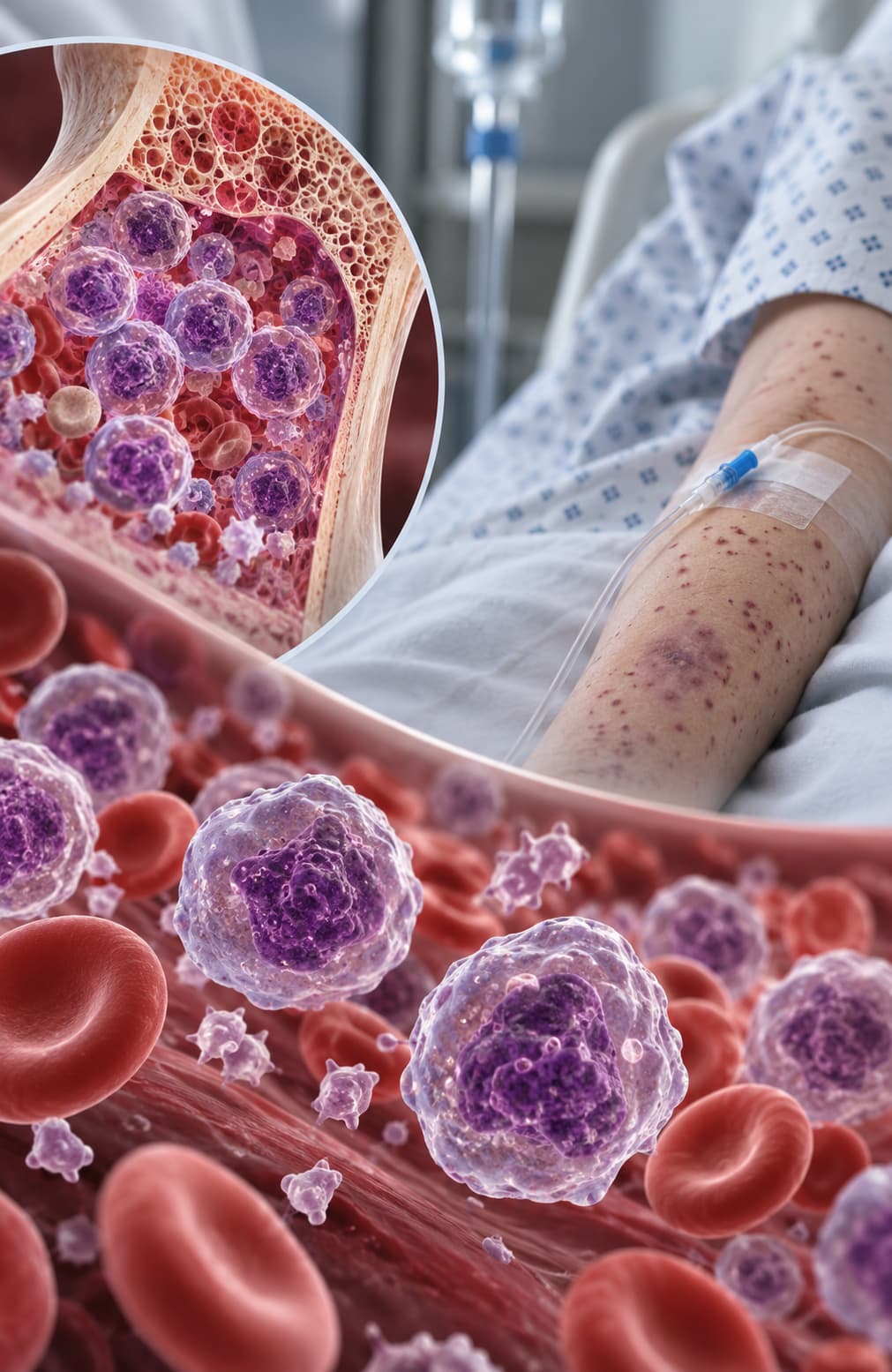
Leukemia develops when one blood-forming cell acquires changes that allow it and its descendants to grow abnormally. These leukemia cells can multiply in the bone marrow and blood and interfere with normal blood-cell production.
When normal red blood cells fall, anemia can develop. Too few healthy infection-fighting white blood cells can increase the risk of infection. A shortage of platelets can make bruising and bleeding more likely.
Some leukemias mainly remain in the blood and bone marrow, while others can also affect lymph nodes, the spleen, liver, or other tissues.
What Are the Main Types of Leukemia?
Leukemias are commonly described according to how quickly they develop and which blood-cell family they affect.
Acute myeloid leukemia (AML): AML develops from immature myeloid cells and usually progresses quickly. It is mainly a disease of adults, particularly older adults, although it can occur at any age. AML includes many genetic subtypes, and these differences strongly influence treatment and outlook (2).
Acute lymphoblastic leukemia (ALL): ALL develops from immature lymphoid cells. It can occur in both children and adults and is the most common leukemia in children. Modern treatment has produced very high cure rates for many children, although outcomes vary by subtype and individual risk factors (3, 6).
Chronic lymphocytic leukemia (CLL): CLL is a cancer of mature B lymphocytes, a type of white blood cell. It usually develops slowly and mainly affects older adults. Some people live for years without needing treatment, while others develop disease that requires therapy sooner (4).
Chronic myeloid leukemia (CML): CML is a myeloid leukemia usually driven by a genetic change that creates the BCR::ABL1 fusion gene, often associated with the Philadelphia chromosome. Modern targeted medicines have transformed CML treatment, and many people diagnosed in the chronic phase can achieve long-term disease control (5).
There are also less common leukemias, including hairy cell leukemia and several rare acute and chronic forms. Their diagnosis and treatment can differ from the four major groups.
What Causes Leukemia and Who Is at Risk?
For most people who develop leukemia, there is no single identifiable cause. Leukemia results from genetic changes within blood-forming cells, but the reason those changes occur is often unknown.
Age is an important factor. AML, CLL, and CML become more common with increasing age, while ALL has a major peak in childhood (2-6).
Previous chemotherapy or radiation treatment for another cancer can increase the risk of certain leukemias later in life. High levels of ionizing radiation and exposure to chemicals such as benzene are also established risk factors for some myeloid leukemias. Cigarette smoking increases the risk of AML (2).
Certain inherited conditions, including Down syndrome and some rare disorders affecting DNA repair or bone marrow function, increase the risk of particular leukemias. Having a close relative with CLL also increases the likelihood of developing CLL, although most relatives never develop the disease (4).
Having a risk factor does not mean a person will develop leukemia, and many people diagnosed with leukemia have no obvious risk factor.
What Are the Symptoms of Leukemia?
Leukemia symptoms depend on the type of disease, how quickly it is growing, and how much normal blood-cell production has been affected.
Tiredness, weakness, pale skin, and shortness of breath can develop when the number of red blood cells falls. Frequent or severe infections and unexplained fever may occur when normal white blood-cell function is impaired.
Low platelet levels can cause easy bruising, frequent nosebleeds, bleeding gums, small red or purple spots under the skin, or bleeding that takes longer than expected to stop.
Other symptoms can include unexplained weight loss, night sweats, bone or joint pain, and a feeling of fullness in the abdomen caused by an enlarged spleen.
Some leukemias can cause enlarged lymph nodes in the neck, armpits, or groin.
Symptoms can appear rapidly in acute leukemia. Chronic leukemias may develop much more slowly and can sometimes be discovered on a routine blood test before symptoms appear.
None of these symptoms is specific to leukemia. Many common conditions can cause similar problems, so blood tests and other investigations are needed to establish the diagnosis.
How Is Leukemia Diagnosed?
A complete blood count is often the first test that raises concern about leukemia. It measures red blood cells, different types of white blood cells, and platelets. The results may show unusually high or low cell counts.
A blood smear allows specialists to examine blood cells under a microscope. Abnormal or immature cells may provide important clues about the type of leukemia.
A bone marrow aspiration and biopsy is required for the diagnosis and classification of many leukemias. A sample of marrow, usually taken from the pelvic bone, is examined to determine which cells are abnormal and how much of the marrow they occupy (1-3).
Flow cytometry identifies proteins on or inside leukemia cells. These protein patterns help determine which blood-cell family the cancer came from and can distinguish between different leukemia types.
Chromosome and genetic tests look for changes within the leukemia cells. These tests have become a central part of modern diagnosis. They can confirm particular leukemia subtypes, help estimate how the disease may behave, and identify genetic targets for specific medicines (1-5).
For example, testing for BCR::ABL1 is central to diagnosing and monitoring CML and is also important in some cases of ALL (3, 5).
How Is Leukemia Treated?
Treatment differs greatly between leukemia types. Age, general health, genetic findings, previous treatment, disease stage or risk group, and personal preferences can all influence the treatment plan.
Acute myeloid leukemia: AML usually requires treatment soon after diagnosis. Some people receive intensive chemotherapy designed to produce remission. Older or less medically fit people may receive lower-intensity treatment, often involving medicines such as azacitidine combined with venetoclax. Genetic testing can identify AML with mutations such as FLT3 or IDH1 that may respond to targeted medicines. Treatment has become increasingly matched to the biological features of the leukemia (2).
Acute lymphoblastic leukemia: ALL treatment commonly uses several medicines given in phases over an extended period. Treatment may include chemotherapy, corticosteroids, targeted medicines, and immunotherapies. Philadelphia chromosome-positive ALL is treated with medicines that block the BCR::ABL1 protein. Newer treatments such as blinatumomab, inotuzumab ozogamicin, and chimeric antigen receptor (CAR) T-cell therapy have expanded treatment options for selected people (3).
Children with ALL are treated using carefully designed pediatric protocols based on disease features and treatment response. Childhood ALL is one of the major success stories of modern cancer treatment, although treatment remains intensive and requires long-term follow-up (6).
Chronic lymphocytic leukemia: CLL does not always need immediate treatment. People with early disease and no significant symptoms may be monitored without therapy. This is sometimes called active surveillance or watchful waiting. When treatment becomes necessary, targeted medicines have largely replaced traditional chemotherapy for many people. Options include inhibitors of Bruton's tyrosine kinase and treatments based on the BCL2 inhibitor venetoclax, sometimes combined with an antibody medicine (4).
Chronic myeloid leukemia: CML is usually treated with tyrosine kinase inhibitors (TKIs), which block the abnormal BCR::ABL1 protein that drives the leukemia. Several TKIs are available. Regular molecular blood testing measures the amount of BCR::ABL1 and shows how well treatment is working. Some people who achieve a very deep and lasting response may eventually be able to try stopping treatment under careful specialist monitoring (5).
What Is Measurable Residual Disease?
Measurable residual disease (MRD) means that a very small number of leukemia cells remain after treatment even though ordinary tests may show remission.
Highly sensitive laboratory methods can detect these cells. Depending on the type of leukemia, testing may use flow cytometry or molecular methods that identify specific genetic changes.
MRD is particularly important in acute leukemias. It can help show how deeply the leukemia has responded to treatment and may influence decisions about further therapy or stem cell transplantation (2, 3).
A positive MRD result does not mean that relapse is certain. It is one part of a larger assessment that includes leukemia type, genetic findings, treatment received, and changes over time.
When Is Stem Cell Transplantation Used?
A hematopoietic stem cell transplant replaces diseased blood-forming cells with healthy stem cells. In leukemia, an allogeneic transplant uses stem cells from another person.
Transplantation is not needed for every leukemia. It may be considered for some people with high-risk AML or ALL, especially when the chance of the disease returning with other treatment is considered high. It can also be used for leukemia that has returned or has not responded well to initial treatment (2, 3).
Most people with chronic-phase CML now achieve good disease control with TKIs and do not need transplantation. However, transplantation remains an important option when CML is resistant to available medicines or progresses to a more advanced phase (5).
The potential benefit must be balanced against significant risks, including infections, organ complications, and graft-versus-host disease, in which donor immune cells attack the recipient's tissues.
What Are the Possible Complications of Leukemia and Its Treatment?
Leukemia can cause complications both from the disease itself and from treatment.
Low levels of healthy blood cells can lead to anemia, infection, and bleeding. Acute leukemias can sometimes produce very high numbers of abnormal cells, creating urgent problems with blood flow or organ function.
Treatment can further lower normal blood counts before the bone marrow recovers. Blood or platelet transfusions, antibiotics, antiviral or antifungal medicines, and other supportive treatments may therefore be required.
When large numbers of leukemia cells die quickly after treatment begins, substances released from the cells can disturb the body's chemical balance. This is called tumor lysis syndrome. People at risk can receive fluids and medicines to prevent or control it.
Some leukemia treatments can have longer-term effects on the heart, bones, nerves, fertility, or other organs. The risks depend on the medicines used, the person's age, and the length and intensity of treatment.
Is Leukemia Curable?
Whether leukemia can be cured depends greatly on the type of leukemia and the individual disease.
Many children with ALL are cured, and outcomes for adults with ALL have also improved as targeted and immune-based treatments have been added to therapy (3, 6).
Some people with AML are cured with chemotherapy, targeted treatment, stem cell transplantation, or combinations of these approaches. The likelihood varies greatly with age, genetic subtype, general health, and response to treatment (2).
CLL is usually considered a long-term disease rather than one that is routinely cured with standard treatment. However, modern targeted medicines can produce deep and long-lasting remissions, and some people may live for many years without needing continuous treatment (4).
CML has been transformed by TKIs. Many people diagnosed in chronic phase can expect prolonged disease control, and selected people with a sustained deep molecular response can remain in remission after carefully supervised treatment withdrawal (5).
Population survival statistics cannot predict exactly what will happen to one person. The outlook depends on the leukemia subtype, genetic changes, age, overall health, response to treatment, MRD results, and access to appropriate therapy.
Conclusion
Leukemia is a group of blood cancers rather than a single disease. The major types are AML, ALL, CLL, and CML, and each behaves differently. Symptoms often result from reduced production of healthy blood cells and can include tiredness, infections, bruising, bleeding, fever, and weight loss. Diagnosis requires blood tests and often bone marrow, flow cytometry, chromosome, and genetic testing. Treatment is increasingly tailored to the exact leukemia subtype and may include chemotherapy, targeted medicines, immunotherapy, or stem cell transplantation. Major advances in diagnosis and treatment have greatly improved the outlook for many people, although outcomes continue to vary widely between leukemia types and individuals.
References
- Arber DA, Orazi A, Hasserjian RP, et al. International Consensus Classification of Myeloid Neoplasms and Acute Leukemias: integrating morphologic, clinical, and genomic data. Blood. 2022;140(11):1200-1228. https://doi.org/10.1182/blood.2022015850
- Shimony S, Stahl M, Stone RM. Acute myeloid leukemia: 2025 update on diagnosis, risk-stratification, and management. Am J Hematol. 2025;100(5):860-891. https://doi.org/10.1002/ajh.27625
- Gökbuget N, Boissel N, Chiaretti S, et al. Management of ALL in adults: 2024 ELN recommendations from a European expert panel. Blood. 2024;143(19):1903-1930. https://doi.org/10.1182/blood.2023023568
- Hallek M. Chronic lymphocytic leukemia: 2025 update on the epidemiology, pathogenesis, diagnosis, and therapy. Am J Hematol. 2025;100(3):450-480. https://doi.org/10.1002/ajh.27546
- Apperley JF, Milojkovic D, Cross NCP, et al. 2025 European LeukemiaNet recommendations for the management of chronic myeloid leukemia. Leukemia. 2025;39(8):1797-1813. https://doi.org/10.1038/s41375-025-02664-w
- Elgazar S, Constantinou C. Paediatric acute lymphoblastic leukaemia: a narrative review of current knowledge and advancements. Curr Oncol Rep. 2024;26(12):1586-1599. https://doi.org/10.1007/s11912-024-01608-4
This article is part of the 'Public Education Series' initiative by Exon Publications.
Disclaimer: This article is for general educational purposes only and does not constitute medical advice, diagnosis, or treatment. Consult a qualified healthcare professional about personal health concerns.
Note on External Links: External links were checked and accessible when this article was published. Their content and availability may change over time and are outside the control of Exon Publications.
Downloads
Article Details

This work is licensed under a Creative Commons Attribution-NonCommercial-NoDerivatives 4.0 International License.