
Cerebral Palsy: Types, Symptoms, Causes, Diagnosis, Treatment, and Outlook
Article Sidebar
Main Article Content
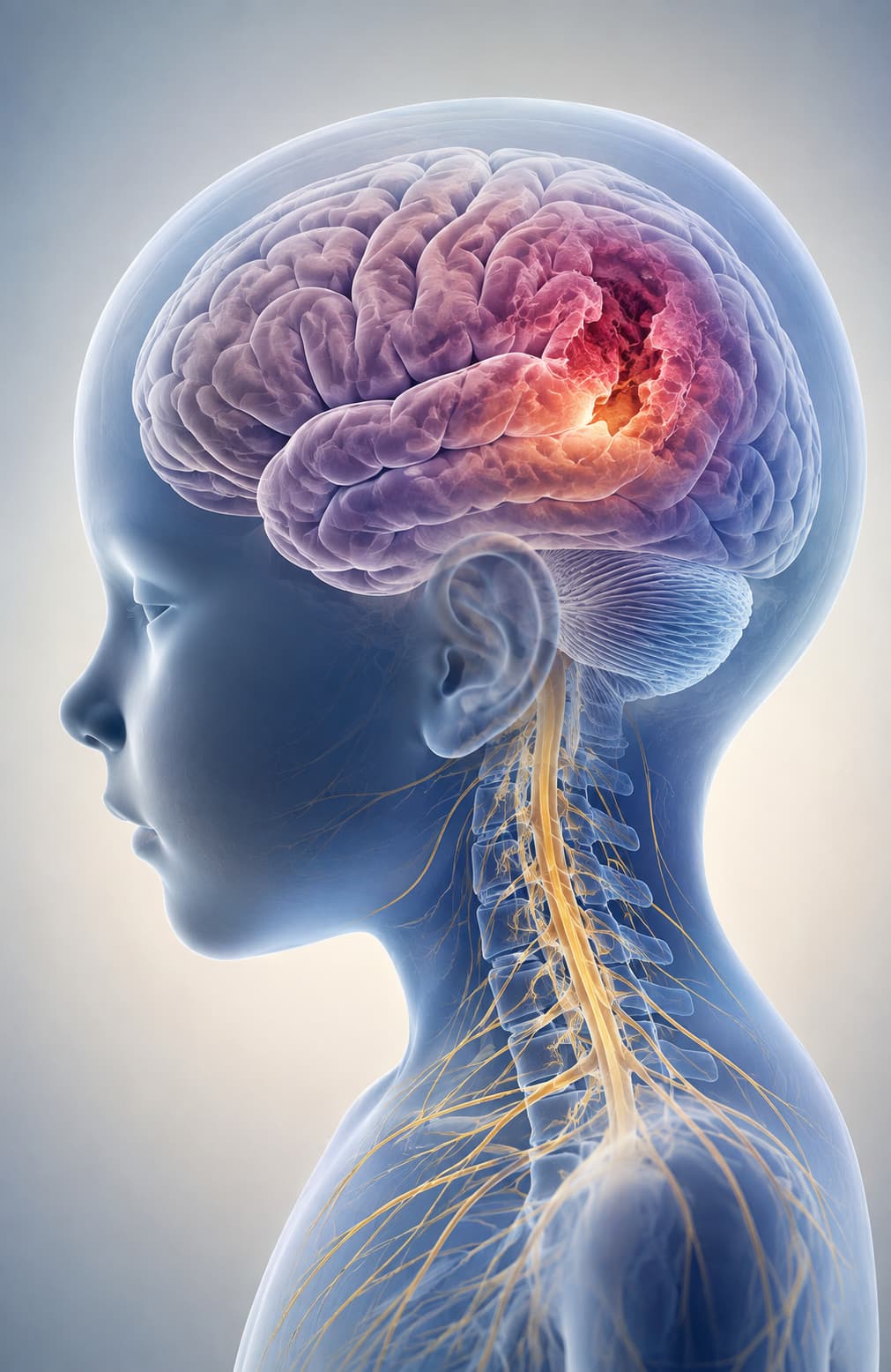
Cerebral palsy is a lifelong condition that affects movement, posture, balance, and muscle control. It results from changes, injury, or abnormal development in the developing brain. Symptoms range from mild stiffness or poor coordination to severe movement problems and may occur with seizures, speech or swallowing difficulties, vision problems, or learning difficulties. Cerebral palsy does not worsen because the original brain injury is non-progressive, but its effects can change over time. Early diagnosis and therapy can improve movement, communication, comfort, and independence. Treatment is individualized and may include rehabilitation, medicines, assistive devices, injections, or surgery.
Cite as: Cerebral Palsy: Types, Symptoms, Causes, Diagnosis, Treatment, and Outlook. Brisbane (AU): Exon Publications; 2024 May 18 [updated 2026 Aug 21].
Introduction
Cerebral palsy is the most common physical disability that begins in childhood. It affects how the brain controls muscles and movement, but it can look very different from one person to another. Some people walk without help, while others use walkers or wheelchairs. Cerebral palsy may also affect speech, eating, vision, learning, or other parts of daily life. The brain changes that cause cerebral palsy do not keep getting worse, but the person's needs can change throughout childhood and adulthood (1, 2).
What Is Cerebral Palsy?
Cerebral palsy is a group of conditions that affect movement and posture because the developing brain has been injured or has developed differently. The brain change occurs before birth, around the time of birth, or during early childhood (1).
The word cerebral refers to the brain, and palsy refers to problems with movement or muscle control. Cerebral palsy mainly affects movement, but the brain areas involved may also influence other functions.
Cerebral palsy is described as non-progressive. This means that the original brain injury or developmental change does not continue to spread. However, its effects are not necessarily unchanged throughout life. Growing bones and muscles, repeated strain, aging, pain, joint problems, and changes in activity can alter how the condition affects a person over time (1, 2).
What Are the Main Types of Cerebral Palsy?
Cerebral palsy is commonly grouped according to the main type of movement problem (1, 2).
Spastic cerebral palsy is the most common type. Muscles are unusually stiff or tight because of increased muscle tone. Movement may be difficult or limited. Spasticity can mainly affect one side of the body, both legs, or all four limbs.
Dyskinetic cerebral palsy causes movements that may be twisting, repetitive, slow, or difficult to control. Muscle tone can change from being too tight to too loose. These movements can affect the limbs, face, tongue, and trunk and may make speaking or eating difficult.
Ataxic cerebral palsy mainly affects balance, coordination, and precise movement. A person may have an unsteady walk and difficulty with tasks that require careful control of the hands.
Mixed cerebral palsy occurs when a person has features of more than one type. For example, someone may have both spasticity and involuntary movements.
The type of cerebral palsy does not by itself show how independent a person will be. The effects can range from mild to severe within each type.
What Are the Symptoms of Cerebral Palsy?
The main signs of cerebral palsy involve movement, posture, and muscle control. Symptoms differ depending on which areas of the brain and body are affected (1, 2).
In babies and young children, possible signs include delayed movement milestones, difficulty controlling the head, unusual stiffness or floppiness, using one side of the body more than the other, unusual crawling, difficulty sitting, or delayed walking. Some children may walk on their toes or have movements that seem stiff, jerky, or poorly coordinated.
As children grow, movement problems may become easier to recognize. Muscles may remain tight, joints may lose some movement, or walking may require more effort. Some people develop involuntary movements or problems with balance.
Cerebral palsy can occur with other health or developmental problems. These may include seizures, pain, vision or hearing problems, speech difficulties, problems with chewing or swallowing, learning difficulties, sleep problems, and problems controlling the bladder or bowel. Not everyone has these additional problems, and intellectual ability varies widely among people with cerebral palsy (1, 2).
What Causes Cerebral Palsy?
Cerebral palsy develops when the brain is injured or develops differently during the period when it is still forming. There is no single cause (1).
Problems may begin during pregnancy. They can include abnormal brain development, fetal stroke, some infections, problems affecting the placenta, or genetic changes. Premature birth and very low birth weight increase the risk because the immature brain is more vulnerable to injury.
Around the time of birth, serious lack of oxygen can cause brain injury in some babies. However, cerebral palsy should not automatically be assumed to have resulted from a difficult birth. Many cases begin before labor starts or result from several interacting factors rather than one event (1, 2).
After birth, severe infections of the brain, stroke, serious head injury, or other events that damage the developing brain can sometimes cause cerebral palsy.
Genetics is also more important than previously thought. Research now shows that genetic variants can contribute to cerebral palsy in a substantial minority of people. In some cases, identifying a genetic cause can affect medical care or reveal a condition that requires specific treatment or monitoring (1, 3).
Sometimes, even after careful investigation, the exact cause cannot be identified.
How Is Cerebral Palsy Diagnosed?
Cerebral palsy is diagnosed mainly from a child's medical history, development, movement, muscle tone, posture, and neurological examination. There is no single blood test or scan that by itself confirms every case (2, 4).
Diagnosis can now be made earlier than was possible in the past, especially in babies known to be at high risk. Standardized assessments can examine spontaneous movements and neurological development. Tests such as the General Movements Assessment and the Hammersmith Infant Neurological Examination can help identify infants who are likely to have cerebral palsy. Early recognition allows treatment to begin during an important period of brain development (4).
Magnetic resonance imaging (MRI) may be used to look at the structure of the brain and identify areas of injury or abnormal development. The results can sometimes help explain the type of cerebral palsy or its possible cause.
Genetic testing may also be considered, particularly when the cause is unclear, the clinical features are unusual, or a genetic diagnosis could change medical care. Recent research has shown that genetic testing can provide useful information in a meaningful proportion of people with cerebral palsy (1, 3).
Other assessments may check hearing, vision, speech, swallowing, learning, seizures, movement of the hips and spine, and other health concerns. These assessments help identify the person's individual needs rather than simply confirm the diagnosis.
How Is Cerebral Palsy Treated?
There is no single treatment for cerebral palsy. Treatment is chosen according to the person's movement difficulties, abilities, goals, symptoms, and health needs. The aim is not simply to change muscle tone but to improve comfort, function, participation, and independence (1, 5).
Physical therapy can help develop movement skills, strength, balance, fitness, and flexibility. Modern therapy often focuses on practicing useful activities and movements that matter in daily life.
Occupational therapy helps people develop skills needed for everyday activities such as dressing, eating, writing, using technology, schoolwork, and employment.
Speech and language therapy can help with speech, communication, eating, and swallowing. Communication devices or other assistive technologies can help people whose speech is difficult to understand.
Braces, walkers, wheelchairs, standing devices, and other equipment may improve mobility, positioning, safety, or independence. Equipment should be selected for the person's needs rather than used simply because a particular diagnosis is present.
Muscle stiffness or abnormal muscle tone may require additional treatment. Botulinum toxin injections can reduce spasticity in selected muscles for a limited period. Medicines may also be used to manage widespread spasticity or dystonia. Intrathecal baclofen, in which medicine is delivered through a pump into the fluid around the spinal cord, may be considered for some people with severe muscle tone problems (5, 6).
Surgery may be useful when muscle or bone changes cause significant problems. Orthopedic procedures can correct some deformities or improve positioning. Selective dorsal rhizotomy is a specialized operation that reduces spasticity in carefully selected people.
Treatment may also be needed for associated problems such as epilepsy, pain, feeding difficulties, poor bone health, sleep problems, or hip displacement. Regular hip surveillance is particularly important for children at increased risk of the hip gradually moving out of its normal position (1, 5).
Treatment usually involves several health professionals working with the person and family over time. Goals change as a child grows and as an adult's needs, work, mobility, or health change.
Can Cerebral Palsy Be Prevented?
Not every case of cerebral palsy can be prevented. The condition has many possible causes, and some brain developmental changes or genetic causes cannot currently be prevented (1).
Medical care before and around birth has reduced some risks. Treatments such as magnesium sulfate when very early delivery is expected can lower the risk of cerebral palsy in some premature babies. Antenatal corticosteroids, good neonatal care, and other measures that improve outcomes after premature birth also help reduce brain injury. Therapeutic hypothermia, in which an eligible newborn is carefully cooled after certain types of severe oxygen-related brain injury, can reduce the risk of death or disability (1, 5).
Preventing serious infections, reducing the risk of childhood head injury, treating newborn jaundice appropriately, and providing good pregnancy and newborn care can prevent some causes of brain injury. Even with excellent medical care, however, cerebral palsy can still occur.
What Is the Outlook for People with Cerebral Palsy?
Cerebral palsy is lifelong, but the outlook varies greatly. Many people with cerebral palsy walk, communicate, attend school, work, form relationships, and live independently or with limited support. Others have substantial physical, communication, intellectual, or medical needs and require assistance throughout life (1, 2).
The original brain injury does not become progressively worse. However, living for many years with altered movement can place extra strain on muscles, bones, and joints. Adults may experience pain, fatigue, reduced mobility, arthritis, muscle tightness, or other secondary problems. Regular health care and continued access to rehabilitation can therefore remain important after childhood (1).
Early diagnosis and appropriate treatment can improve function and help prevent some complications. Long-term care is most useful when it focuses not only on movement but also on communication, education, relationships, employment, comfort, independence, and participation in everyday life.
Conclusion
Cerebral palsy is a lifelong condition caused by changes or injury in the developing brain. It mainly affects movement and posture, but its effects vary widely from person to person. Cerebral palsy can result from many different biological and environmental factors, and genetics is increasingly recognized as an important contributor. Earlier diagnosis and evidence-based treatment allow support to begin sooner. Although cerebral palsy cannot usually be cured, rehabilitation, medicines, assistive technology, and selected procedures can improve function, comfort, communication, and independence throughout life.
References
- Novak I, Jackman M, Finch-Edmondson M, Fahey M. Cerebral palsy. Lancet. 2025;406(10499):174–188. https://doi.org/10.1016/S0140-6736(25)00686-5
- Patel DR, Bovid KM, Rausch R, Ergun-Longmire B, Goetting M, Merrick J. Cerebral palsy in children: a clinical practice review. Curr Probl Pediatr Adolesc Health Care. 2024;54(11):101673. https://doi.org/10.1016/j.cppeds.2024.101673
- Lewis SA, Chopra M, Cohen JS, et al. Clinical actionability of genetic findings in cerebral palsy: a systematic review and meta-analysis. JAMA Pediatr. 2025;179(2):137–144. https://doi.org/10.1001/jamapediatrics.2024.5059
- Novak I, Morgan C, Adde L, et al. Early, accurate diagnosis and early intervention in cerebral palsy: advances in diagnosis and treatment. JAMA Pediatr. 2017;171(9):897–907. https://doi.org/10.1001/jamapediatrics.2017.1689
- Novak I, Morgan C, Fahey M, et al. State of the Evidence Traffic Lights 2019: systematic review of interventions for preventing and treating children with cerebral palsy. Curr Neurol Neurosci Rep. 2020;20(2):3. https://doi.org/10.1007/s11910-020-1022-z
- Fehlings D, Agnew B, Gimeno H, et al. Pharmacological and neurosurgical management of cerebral palsy and dystonia: clinical practice guideline update. Dev Med Child Neurol. 2024;66(9):1133–1147. https://doi.org/10.1111/dmcn.15921
This article is part of the 'Public Education Series' initiative by Exon Publications.
Disclaimer: This article is for general educational purposes only and does not constitute medical advice, diagnosis, or treatment. Consult a qualified healthcare professional about personal health concerns.
Note on External Links: External links were checked and accessible when this article was published. Their content and availability may change over time and are outside the control of Exon Publications.
Downloads
Article Details

This work is licensed under a Creative Commons Attribution-NonCommercial-NoDerivatives 4.0 International License.